The modern workplace is changing. It now focuses on both the environment and doing well in business. Companies of all sizes are finding that green office products can change their workspaces. They also help their bottom line.
Virtue Market Research says the eco-friendly stationery market will hit $13.7 billion by 2030. This shows how businesses are choosing sustainable materials for their daily work.
Small changes in office items can greatly cut down on carbon footprints. Using recycled paper, energy-saving tech, and biodegradable stuff shows a company cares about the planet. It also makes work better.
Choosing planet-friendly office items is a smart move. It helps the environment and doesn’t lose out on performance. For companies wanting to help the planet, these items are a good place to start.
The Importance of Eco-Friendly Office Supplies
In today’s world, using eco-friendly office supplies is key for businesses. Companies in the U.S. are seeing how their choices affect the planet. The items we use every day, like paper and pens, add up to a big environmental impact.
Creating a green office means choosing wisely. Every green choice helps cut down on waste and saves resources. It also saves money, makes workplaces healthier, and boosts a company’s image.
Understanding Sustainability in the Office
Sustainability in the office is more than just recycling. It’s about making choices that reduce harm to the environment. This includes thinking about the whole life of materials, from start to finish.
Starting with recycling tips is a good first step. But, companies need to look at how they use things. They can use digital documents, print on both sides, or choose reusable items instead of disposable ones.
The idea of a paperless office is becoming more popular. New tech lets us use digital documents and sign things online. This cuts down on paper use and makes work easier and more accessible.
Green practices also include saving energy and water, and being mindful of how we get to work. Seeing how all parts of the office work together helps businesses make better choices for the planet.
Environmental Impact of Traditional Supplies
Traditional office supplies have a big environmental impact. From getting resources to making, using, and throwing away products, they harm the planet in many ways.
Paper production is very resource-heavy. It’s a big part of solid waste and uses a lot of water and energy. One tree can make about 8,333 sheets of paper, which many offices use in just a few days.
Plastic products, like pens and desk organizers, last for centuries. They break down into tiny pieces that pollute our environment and get into our food. Making these plastics also adds to greenhouse gases.
Printer inks are made from petroleum and can be harmful. They can pollute soil and water if not disposed of right. This harms the environment for a long time.
Cleaning supplies often have chemicals that are bad for air and water. Even simple things like sticky notes and correction fluid can be harmful. They can hurt people and the planet.
Getting office supplies to us also pollutes the air. Products travel far, adding to their carbon footprint. This makes a big difference in the environment.
Knowing these facts helps businesses choose better. Using products made from renewable resources or recycled materials is better for the planet. It keeps things working well without harming the environment.
- Recycled paper products reduce deforestation and energy consumption
- Plant-based inks minimize toxic chemical release
- Refillable writing instruments decrease plastic waste
- Biodegradable packaging reduces landfill contributions
- Energy-efficient equipment lowers carbon emissions
Switching to eco-friendly options makes a big difference. It’s not just about one item. It’s about making a big change for the planet and saving resources.
Benefits of Using Eco-Friendly Supplies
Switching to eco-friendly office supplies brings big wins. It saves money, boosts health, and looks good to others. At first, some think it costs more. But, it really pays off in many ways.
Cost-Effectiveness Over Time
Eco-friendly stuff might cost more at first. But, it saves money over time. This is because it lasts longer and uses less.
Energy-efficient tools like LED lights are a great example. They use 75% less power and last 25 times longer. This means big savings on energy and less need to buy new ones.
Refillable pens are another smart choice. They save money and reduce waste. Also, recycled paper is now as good as new paper but cheaper in bulk.
Going green also makes things run smoother. Paperless offices save on printing and storage. Companies using sustainable materials often cut their supply costs by 15-30% in two years.
Enhancing Employee Wellness
Green office supplies are good for health. Regular office stuff can harm the air. But, eco-friendly stuff is safer.
Stuff made from sustainable materials has fewer bad chemicals. This means cleaner air and less sickness. Natural lighting and plants also make work better.
Healthy workspaces make people happier and more productive. They get sick less and work better. This makes everyone happier and more loyal.
- Less time off for being sick
- People work better when they feel good
- Less eye strain and stress
- Happy employees stay longer
- Less money spent on health care
Companies that care about health show they value their workers. This makes everyone happier and work better.
Boosting Company Reputation
Being green is good for a company’s image. It shows you care about the planet. This makes people like you more.
People want to buy from companies that are green. They’re willing to pay more for it. This shows you’re on the right side of things.
Young people want to work for green companies. It shows you’re serious about the planet. This helps you get and keep good workers.
Investors and partners also like green companies. It shows you’re responsible. This helps you stand out and get more business.
- Aligns with global goals
- Meets investor expectations
- Stands out in the market
- Builds trust with customers
- Wins over partners
Even small green steps can make a big difference. It shows you care and makes people trust you. This is good for business.
Types of Eco-Friendly Office Supplies
Today, companies can find many eco-friendly office supplies. These supplies help reduce waste and save resources. They also make work better and happier for everyone.
Recycled Paper Products
Even though going paperless is a goal, paper is often needed. Luckily, recycled paper is now better and more varied. It’s as good as new paper but is much better for the planet.
There are two types of recycled paper. One comes from waste after people use it, and the other is from scraps before they reach us. Making recycled paper uses less energy and water than making new paper.
The Forest Stewardship Council (FSC) checks if paper comes from good forests. Choose paper with lots of recycled content. Now, you can find paper that’s 100% recycled and works just as well.
- Notebooks and journals made from recycled materials
- File folders and organizational products from recycled cardboard
- Shipping materials with recycled content
- Alternative fiber sources like bamboo, sugarcane, and agricultural residues
- Sticky notes and adhesive products with water-based, non-toxic adhesives
To make paper last longer, recycle it well. Set up recycling spots in the office. Print on both sides and reuse paper before recycling. These steps help paper last longer.
Biodegradable Writing Instruments
Pens are a big source of waste. In the US, people throw away 1.6 billion pens every year. Eco-friendly pens are a good solution and write well.
Eco-friendly pens use sustainable materials like:
- Cornstarch-based bioplastics that decompose naturally
- Bamboo barrels with minimal plastic components
- Recycled cardboard and paper bodies
- Reclaimed wood or recycled plastic construction
- Plant-based inks that reduce chemical pollution
Refillable pens are a smart choice. They let you keep the pen body and just change the ink. They might cost more at first, but they save money and reduce waste over time.
Some pens even have seeds inside. When the pen is too short, you can plant it and grow herbs or flowers. This is a full circle of life for the pen.
When picking pens, check their claims and how well they work. The best pens are those that are good for the planet and work well. Many eco-friendly pens are just as good as regular ones.
Sustainable Furniture Options
Furniture is a big investment in the office. It can also harm the environment. Sustainable furniture is made to last, is good for you, and is kind to the planet.
Look for furniture that uses:
- FSC-certified wood from responsibly managed forests
- Recycled metals and plastics that reduce virgin resource consumption
- Rapidly renewable resources like bamboo and cork
- Non-toxic finishes and adhesives that improve indoor air quality
- Modular designs that adapt to changing office needs
Some important certifications for furniture include BIFMA Level. It checks if furniture is good for the environment and people. The higher the level, the better it is.
Other good certifications are Cradle to Cradle and GREENGUARD. They check if furniture is good for the planet and the air inside. SCS Indoor Advantage also checks if furniture is safe for indoor air.
Modular furniture is very good for the planet. It can change with your office needs. It lasts longer and wastes less. Many modern furniture pieces also use energy-efficient tools like LED lights.
Refurbished furniture is also growing in popularity. It’s good for the planet and your wallet. It looks and works great, and it’s made from materials that would have been thrown away.
Key Features to Look for in Eco-Friendly Products
The market for green office supplies is full of claims. It’s key to spot the real eco-friendly features. Companies often say their products are “green” or “eco-friendly.” But, how do you know if it’s true?
Knowing what makes a product sustainable is important. This way, you can avoid greenwashing. Greenwashing is when companies make false environmental claims. It’s important to invest in a green office environment.
Material Sourcing and Certifications
The start of any eco-friendly product is its materials. Look for products made from materials that don’t harm the environment. Bamboo is a good example because it grows fast and doesn’t need a lot of farming.
Recycled materials are also a sign of sustainability. These products use materials that have been used before. For paper, look for at least 30% recycled content. But, 100% recycled is even better.
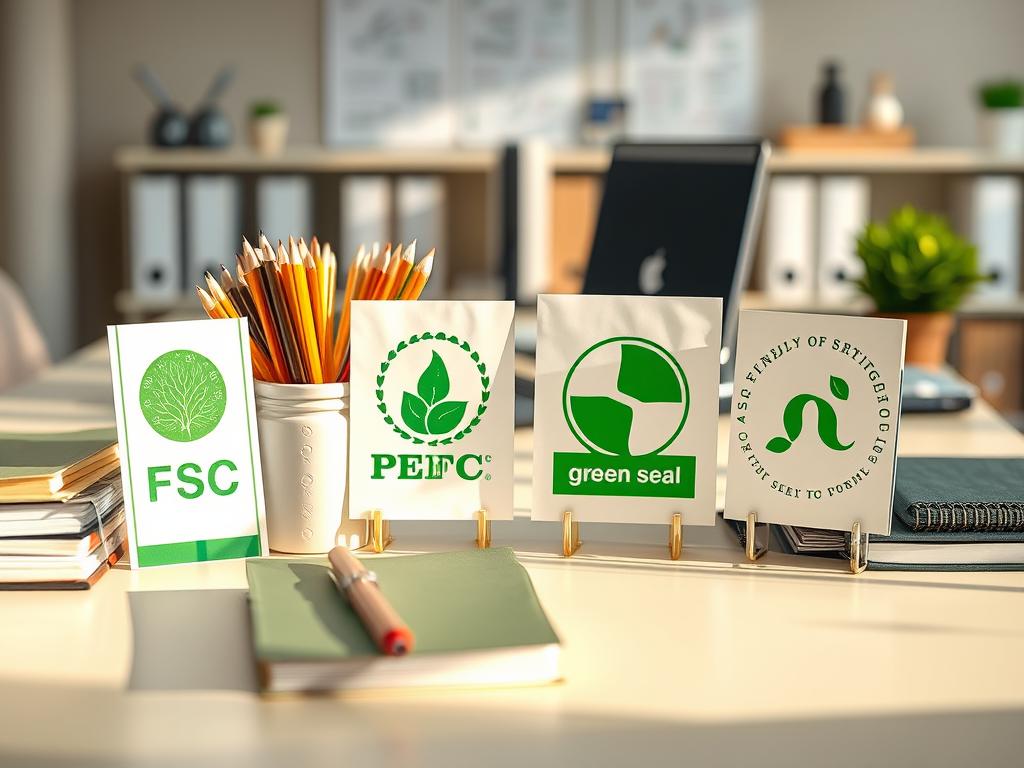
Third-party certifications are important. They check if companies are telling the truth about their products. Look for these certifications when buying office supplies:
- Forest Stewardship Council (FSC) – Makes sure paper and wood come from well-managed forests
- Green Seal – Checks if products meet high environmental standards
- ENERGY STAR – Finds energy-saving electronics
- GREENGUARD – Shows products have low chemical emissions for better air
- Cradle to Cradle – Sees if products are made for a circular economy
Other certifications to look for include EPEAT for electronics, BPI Certified Compostable for biodegradable items, and SCS Recycled Content verification. Having many certifications shows a company really cares about the environment.
Product Lifecycle Considerations
Looking at a product’s whole life is key to sustainability. This means from getting the raw materials to when it’s thrown away. This view shows the real environmental effect of products.
How long a product lasts is very important. Long-lasting items need to be replaced less often. This means they use fewer resources. For example, refillable pens make less waste than disposable ones. And, good furniture can last for decades, not just years.
When picking eco-friendly office supplies, think about these lifecycle factors:
- Repairability – Can it be fixed instead of thrown away?
- Recyclability – Are parts marked for recycling?
- Design for disassembly – Can it be taken apart for recycling?
- Biodegradability – Does it break down naturally?
- Packaging minimalism – Is the packaging needed and recyclable?
Having good recycling tips in your office helps too. Set up places for different recyclables. Many companies also take back items that can’t be recycled normally, like toner cartridges and electronics.
The paperless office idea is the best for reducing waste. Using digital documents and cloud storage cuts down on paper use. Even a little bit of paperless work can help the environment a lot.
Smart companies use lifecycle assessments to check their environmental impact. This helps them choose products that are best for the planet. It’s worth the effort to find sustainable products. They help reduce waste and improve your company’s image.
Tips for Transitioning to Eco-Friendly Supplies
Starting a greener workplace needs a careful plan. It’s about balancing today’s needs with tomorrow’s goals. The journey to a greener office is a series of steps, not a quick fix.
Start with the 3R principle. Reduce, Reuse, and Recycle. This is a good base for change. Every small step helps make a big difference.
Conducting an Office Supply Audit
First, know what you use and its impact. An office supply audit helps you understand your current use. It shows where you can improve.
Make a list of all supplies used in your office. Include what each item is, how much you use, and how you dispose of it. This list helps you find ways to recycle and use green alternatives.
Look at how different departments use supplies. Find out what items are used a lot. For example, if you use a lot of paper, think about going paperless.
Ask important questions about each supply:
- Is this item really needed?
- Can we do without it?
- Is there a digital option?
- Is there a greener version?
- How often do we replace or throw it away?
Check what gets thrown away to find recycling chances. Watch trash and recycling bins to see what can be recycled better.
Get your team involved in the audit. Their ideas are key to making changes they’ll use. Use surveys or focus groups to hear about current supplies and green options.
Setting Sustainability Goals
With your audit data, set clear goals. Goals should be SMART: Specific, Measurable, Achievable, Relevant, and Time-bound. This makes sure your goals are real and effective.
Start with a vision for your green office. This vision should match your company’s mission and values. It shows why going green is important to your company and others.
Set goals in different areas of office sustainability:
- Reduce waste (e.g., cut landfill waste by 30% in a year)
- Save energy with energy-efficient tools (e.g., switch to LED lights by Q3)
- Use less water (e.g., cut water use by 20% with efficient fixtures)
- Lower carbon footprint (e.g., cut shipping emissions by 15%)
- Buy sustainable supplies (e.g., use eco-certified supplies for 50% of needs)
Have both short-term and long-term goals. Quick wins keep you going, while big goals lead to real change. For example, switch to recycled paper first, then aim for a paperless office later.
Get everyone involved in setting goals. This ensures everyone is on board and brings different ideas. Team leaders can share what’s needed, and employees can suggest green ideas.
Share your goals clearly with everyone. Use dashboards or newsletters to keep everyone updated. Make a green corner in your office to show goals and achievements.
Make sure someone is in charge of each goal. Have regular meetings to check progress and solve problems. This keeps sustainability a top priority.
Link your goals to big initiatives like the UN Sustainable Development Goals. This shows how your local efforts help the world and boosts your company’s green image.
Going green is more than buying new products. It’s about creating a culture that cares about the planet. With a good audit and goals, you’re ready to make a lasting difference in your workplace.
How to Assess Vendors for Eco-Friendly Supplies
Finding the right office supplies that are good for the planet is key. Many companies say they are green, but it’s hard to know who is really true to their word. By carefully checking vendors, you can make sure your office is as green as it can be.
Evaluating Eco-Certifications
Looking at environmental certifications is a good start. But not all certifications are the same. Knowing the difference helps you choose the right products:
- First-party claims: Self-declarations made by manufacturers with no external verification
- Second-party verifications: Standards developed by industry associations
- Third-party certifications: Independent verification by recognized organizations
Third-party certifications are usually the most trustworthy. They involve tests done by outside groups. Look for certifications with clear rules, science backing, and regular checks.
There are many good certifications for office supplies. The Forest Stewardship Council® (FSC) checks if paper comes from well-managed forests. ENERGY STAR labels energy-efficient tools that use less power. Green Seal looks at products from start to finish.
Other important certifications include Cradle to Cradle Certified™ and EPEAT. The BPI Certified Compostable label shows items can be composted. These help your office recycle better.
Always check the certification database, not just what the vendor says. This way, you avoid greenwashing – when companies claim to be green but aren’t.
Comparing Product Quality and Offerings
Just because a product is green doesn’t mean it works well. You need to check if it meets your needs:
- Set clear quality standards for each product
- Test product samples before buying more
- Get feedback from users on how well it works
- See how it compares to regular products
- Check if it fits with your current systems
Some people worry that green products don’t work as well. But many green products are just as good as regular ones. For example, recycled paper is now as good as new paper.
Look at what the vendor offers overall. Check their product range, order sizes, and delivery times. Also, see if their packaging is green too. Too much packaging can hurt the planet.
The best vendors are green in everything they do, not just their products. Look for those using green energy, cutting down on emissions, and being open about their environmental impact.
Use a decision matrix to compare vendors. This helps you see both the green benefits and how well the products work. This way, you can choose vendors that are good for both your office now and the planet later.
Case Studies: Successful Implementation of Eco-Friendly Supplies
Looking at how companies have gone green shows us the way. They’ve found that being eco-friendly is good for the planet and their business. These stories show that any company can make a difference.
Corporate Examples of Sustainability
Big companies like Microsoft have led the way in going green. They changed how they buy things to use less plastic. This cut their plastic waste by 75% in just two years.
Microsoft replaced things that were used once with things that could be used many times. They also made sure their suppliers were green too.
Smaller companies have also done great things. Green & Associates went paperless and cut their paper use by 87%. They used digital tools and gave tablets to their staff instead of paper.
Wellness Partners shows that health and green can go together. They used safe materials everywhere and cut allergic reactions by 32%. They worked with makers to make special green medical stuff.
Even small groups can make a big difference. Future Forward shared office supplies and cut down on new buys by 40%. They had a place where everyone could get what they needed, making things last longer.
- Technology corporation: 75% reduction in plastic waste
- Accounting firm: 87% decrease in paper consumption
- Healthcare provider: 32% fewer allergic reactions
- Nonprofit: 40% reduction in new supply purchases
- Retail chain: $42,000 annual savings from sustainable practices
Going green can also save money. EcoStyle saved $42,000 a year by using less energy and recycled paper. They showed that being green is good for the planet and the wallet.
Employee Feedback and Engagement
Getting employees on board is key to success. Companies that have gone green say it’s all about getting everyone involved. They talk openly about why they’re making these changes.
Listening to what employees say helps make things better. Green Thinking asked their staff what they thought before making changes. This helped them fix problems and make things work better for everyone.
Teaching people how to recycle is important. Companies that teach their staff how to recycle do better. Sustainable Partners had people teach others how to recycle, and it worked great.
Recognizing good work helps keep things going. EcoTech gave awards for green ideas and got over 120 new ideas in a year. This made everyone want to help.
- Conduct pre-implementation surveys to identify concerns
- Create departmental eco-ambassadors for peer education
- Develop clear guidelines for proper material disposal
- Implement recognition programs for sustainable behaviors
- Communicate collective impact metrics regularly
Showing how everyone’s efforts add up helps. GreenWorks showed how much waste they cut down each month. This made everyone feel like they were making a difference.
Even those who were hesitant at first can become supporters. Sustainable Investments made a big change to go paperless. At first, some were worried, but soon they loved it.
These stories show that with the right plan and teamwork, any company can go green. It’s good for the planet and helps the business too.
Overcoming Challenges in Sustainable Supply Choices
Going green in the office comes with its own set of challenges. Businesses face obstacles that can slow down their green goals. Knowing these challenges and finding ways to tackle them is key to a greener workplace.
Addressing Initial Cost Concerns
High upfront costs are a big hurdle for green office supplies. Decision-makers often look only at the initial cost. But, a full cost analysis is needed.
- Initial purchase price
- Total cost of ownership (including lifespan and maintenance)
- Full cost accounting (including environmental and social factors)
LED lighting, for example, costs more upfront but uses less energy and lasts longer. This means big savings over time.
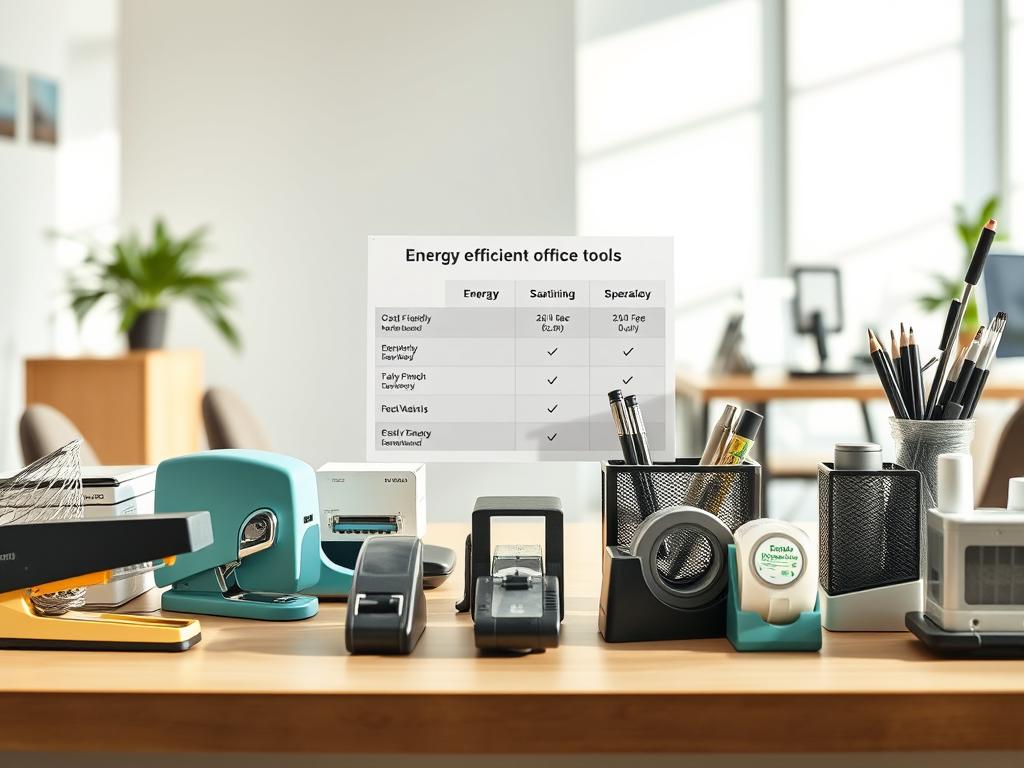
To make a strong case for green materials, calculate ROI and payback periods. A $500 investment in energy-efficient tools can save $15 monthly. This pays off in under three years, saving money for years after.
Here are ways to manage budget while going green:
- Start with big changes and then phase in smaller ones
- Get discounts by buying in bulk
- Join programs that let you buy together with others
- Look for rebates, incentives, and tax breaks
- Focus on value, not just price, when negotiating
Many find that green supply chains can save money in the long run. By sharing these savings, teams can win over price skeptics.
Navigating Limited Availability
Finding green alternatives for some office supplies can be tough. This calls for creative solutions and persistence. Start by researching all possible suppliers of green materials.
When green options are scarce, try these:
- Switch to reusable items instead of disposable ones
- Find substitutes made from easier-to-get sustainable materials
- Work with current suppliers to offer greener choices
- Join groups to buy together
- Focus on sustainability for different product types
Finding green options for snacks and events is getting easier. Compostable straws and cutlery are a big step up from plastic.
Good recycling tips help when perfect green options aren’t available:
- Set up clear recycling spots for different materials
- Work with recycling services for hard items
- Start a program to return printer cartridges
- Use a station for items that are almost used up
- Track how much waste you reduce
Buying green products regularly helps drive innovation. When companies commit to green, suppliers often offer more eco-friendly options.
By tackling cost and sourcing challenges, companies can make the switch to green supplies. This supports the environment and makes businesses more efficient and resilient in a green market.
The Role of Technology in Eco-Friendly Supply Management
Digital innovations are changing how we manage our environmental impact. They help us use resources better and track our progress. This makes our offices more sustainable and efficient.
Utilizing Software to Track Consumption
Tracking software gives us a clear view of how we use office supplies. It helps us find ways to use less and buy smarter. This software is key to making our offices greener.
- Real-time visibility of supply usage across departments
- Identification of waste patterns and opportunities for reduction
- Accurate measurement of progress toward sustainability goals
- Data-driven procurement decisions that reduce overordering
- Cost savings through optimized inventory management
Starting with tracking software is important. It helps us see where we can improve. Many start with tracking paper use to see how much they can save.
Advanced systems can alert us when we’re using too much. For example, they can tell us when a department uses too much paper. This helps us find ways to use less.
Using ID cards or codes for shared resources makes us more aware. This leads to less unnecessary printing. Many offices see big changes after starting this.
Exploring Digital vs. Physical Supplies
Going paperless is a big step toward being greener. Digital tools can replace many physical supplies and make work easier.
Some common changes include:
- Document management systems replacing paper filing
- E-signature platforms eliminating printed contracts
- Digital note-taking apps replacing paper notebooks
- Virtual meeting tools reducing travel and printed materials
- Cloud storage solutions minimizing local storage needs
Choosing digital tools is not just about cutting paper use. We must also think about energy use. Using cloud services that run on renewable energy is better for the planet.
Choosing the right digital tools is important. They should be energy-efficient and help us save money. Things like LED lights and smart thermostats can make a big difference.
Changing to digital tools needs careful planning. Training employees and explaining the benefits helps. We must also think about accessibility and security.
Even with digital tools, some physical supplies are needed. Choosing eco-friendly options for these supplies is important. The goal is to use both digital and sustainable physical products wisely.
Tracking the impact of digital changes is key. It helps us see how we’re doing and shows our commitment to the environment. This data is important for reporting and making more sustainable choices.
Future Trends in Eco-Friendly Office Supplies
As people care more about the planet, office supplies are getting greener. New materials and growing demand are leading the way. Companies want to stay ahead while helping the environment.
Science, what people want, and laws are all pushing for change. This mix is changing how we set up our workspaces.
Innovations in Sustainable Materials
New sustainable materials are coming fast. They’re made from things like plants and fungi. These new items are better for the planet than old plastics and papers.
Bacterial cellulose is another big step. It’s grown in labs and can be shaped into many things. This way, we don’t harm trees or make synthetic stuff.
Recycling is getting better too. Now, plastics can be broken down to their basic parts. This means old office stuff can become new again without losing quality.
New materials are strong but can be thrown away. They’re made from natural fibers and biodegradable stuff. This means they’re good for the planet and last long.
New packaging ideas are also exciting. Some companies offer:
- Edible packaging that dissolves easily
- Plantable packaging with seeds that grow into plants
- Water-soluble materials that leave no trace
- Mushroom-based packaging that breaks down fast
Here are some recycling tips for these new items:
- Keep biobased materials separate from regular recycling
- Check with makers about special recycling programs
- Compost in commercial places when you can
- Teach your team how to dispose of each material right
The Growing Demand for Eco-Conscious Products
The market for green stationery is growing fast. It’s expected to hit $13.7 billion by 2030, says Virtue Market Research. This is because younger workers are choosing eco-friendly options.
Millennials and Gen Z are willing to pay more for green products. This pushes companies to make more sustainable stuff. It’s good for both new and old brands.
Laws are also helping green offices. Rules like plastic bans and carbon pricing make companies think about the environment. Early adopters get ahead.
Certifications are getting tougher. Buyers want to know about the whole life cycle of products. They look for ethical sources and clear supply chains.
Big buyers are changing the game. Large companies and governments are choosing green options. This shapes what products are made.
The need for energy-efficient tools is huge. New ideas include:
- Solar-powered calculators and chargers
- Kinetic energy devices that make power from movement
- Electronics that use less power and last longer
- Smart power strips that cut down on energy waste
- Systems that use natural light to save energy
Some brands are making pencils with seeds. You can plant them when the pencil is too short. Also, inks made from plants are becoming common for green printing.
By keeping up with these trends, companies can get ready for the future. They can stay ahead and help the planet. Early movers find benefits they didn’t expect.
Conclusion: The Path Toward a Greener Office Environment
The journey to a green office is both needed and smart today. The eco-friendly stationery market is growing fast, reaching $13.7 billion by 2030. Companies that go green are leading the change in work culture.
The Long-Term Value of Eco-Friendly Supplies
Buying sustainable materials pays off in many ways. LED bulbs use 75% less energy and last 25 times longer than old bulbs. Using vegetable-based inks also cuts down on harmful emissions.
Going paperless is a big step that saves resources. Digital systems use less paper and keep info safe. When paper is needed, choose recycled options to help forests.
Encouraging a Culture of Sustainability in the Workplace
Changing for good needs a culture of green in the office. Simple recycling tips, like the 3R principle, guide daily choices. Using refillable pens instead of disposable ones shows a commitment to the planet.
Companies that choose green often see big wins. They get happier employees, a better reputation, and new ideas. Making smart choices about office supplies helps the planet and shows what a company values.