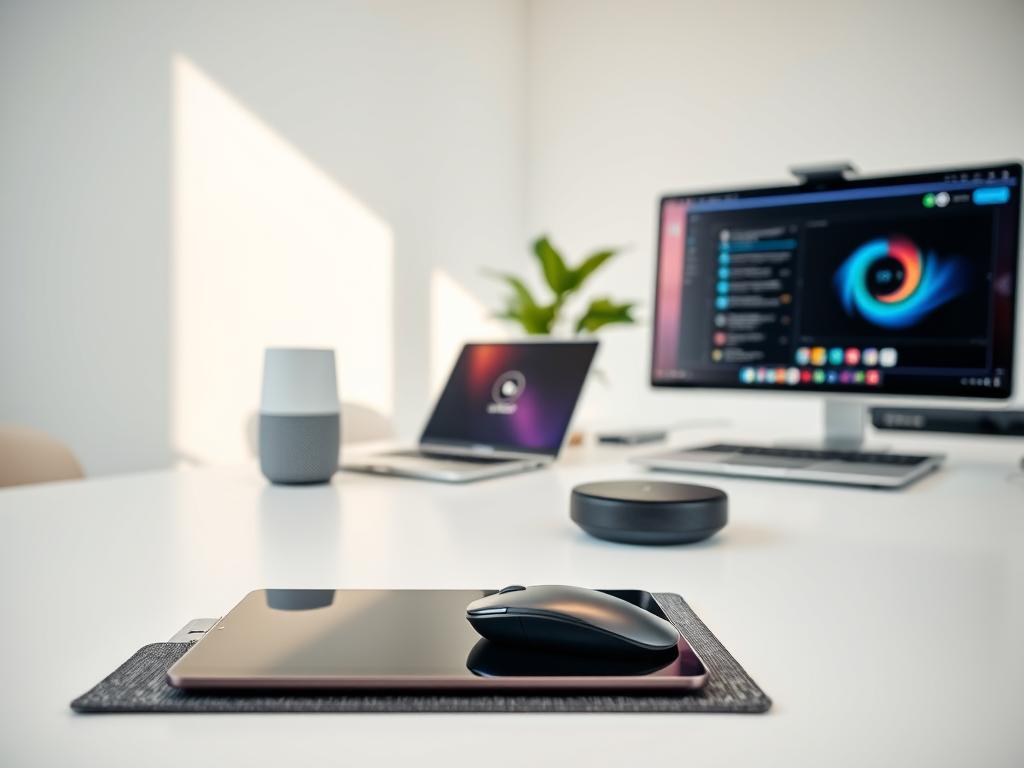
The modern workplace keeps changing with new tech. People spend a lot of time at work, so being productive and comfortable is key. Connected devices have changed how teams work together and get things done.
Now, tech handles tasks that used to take up a lot of time. Things like automated lights and smart scheduling assistants are big help. They let teams focus on being creative and thinking big.
Adding the right tech to the workplace does more than just make things easier. It can make teams up to 40% more productive. It also makes work less stressful for everyone. The best changes come from adding new tools that solve real problems.
This guide looks at ten tech tools that make work better right away. They are chosen for being easy to use and making a big difference. These tools help make a workspace that is smart and fits what people need.
What are Smart Office Devices?
Smart office devices are smart technologies that make work easier and more efficient. They help automate tasks and make workspaces more responsive. These tools are key for businesses to stay ahead in the digital world.
Definition and Overview
A smart office uses connected devices to improve work. It’s like a smart home but for work. It helps employees work better and feel less stressed.
Smart office tech has grown a lot. It started with simple tools like digital calendars. Now, it includes complex systems that talk to each other and learn from use.
- Communication and collaboration tools (smart conferencing systems, digital whiteboards)
- Environmental controls (intelligent lighting, climate management)
- Productivity enhancers (smart desks, automated scheduling assistants)
- Security systems (biometric access, smart surveillance)
- Facility management solutions (occupancy sensors, resource monitoring)
What makes smart office devices special is how they work together. They create a space that changes to meet needs, making work better.
Importance in Modern Workspaces
Smart office tech has become very popular. It helps with remote and hybrid work. It makes work feel seamless, no matter where you are.
Today, people expect tech to help them work well. Companies that use office automation attract better talent. They see tech as a must, not a luxury.
Smart offices are key for digital transformation. Companies that don’t update risk being left behind. They miss out on cost savings and better customer service.
Smart office devices change how we think about workspaces. Old offices were fixed, but now they change to fit people. It’s about making spaces that work for everyone, not the other way around.
Benefits of Using Smart Office Devices
Smart office devices make work better in many ways. They turn old workspaces into places where people can work well together. Companies that use smart office tech see big wins for their work and happy employees.
Enhanced Productivity
Smart devices cut down on boring tasks that waste time. They let people focus on important work. For example, booking meeting rooms online saves time.
Smart plugs help by controlling when office stuff turns on and off. This saves time and energy. It makes sure computers and printers are ready when you need them.
Less downtime means more work gets done. Smart systems watch for problems before they happen. This keeps things running smoothly without surprises.
Improved Collaboration
Today’s workplaces have people in the office and working from home. Smart tech makes it easy for everyone to work together. Digital whiteboards and video calls make sure everyone is heard and seen.
Sharing info is easier with smart tools. You can send files to anyone, anytime. This means everyone has the latest version of documents.
Smart tools help teams solve problems faster. They can see data together and share ideas easily. This leads to quicker decisions and new ideas.
Cost Efficiency
Smart tech saves money by using less energy. Smart plugs and lights turn off when not needed. This can cut energy costs by up to 30%.
Smart tech also saves on paper and ink. It helps figure out how to use office space better. This makes the office more efficient.
Happy employees don’t miss work as much. They’re more likely to stay with the company. This means less money spent on hiring new people.
Smart office tech is a smart investment. It boosts productivity, teamwork, and saves money. Most companies see a good return on their investment in 1-2 years.
Key Features to Look for in Smart Office Devices
Before adding connected devices to your office, find out what’s most important. The right tech can boost productivity. But, the wrong choice can cause trouble and waste money. Knowing what makes devices “smart” helps you choose wisely.
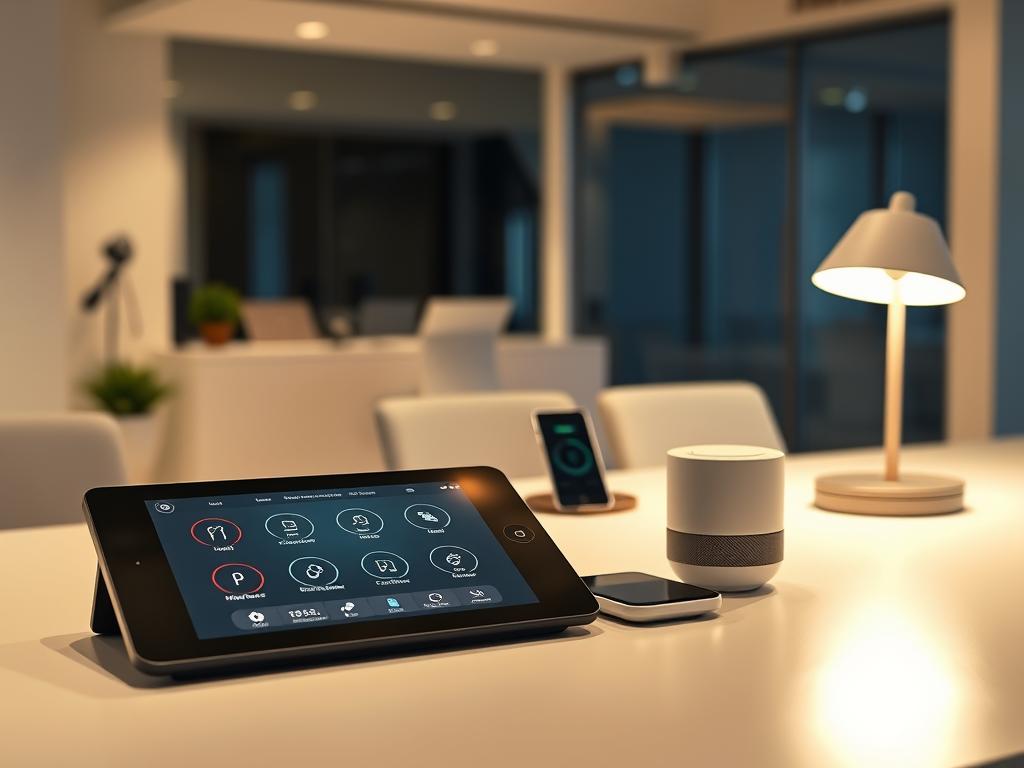
Look at these key points when picking smart office tech. The best choices match your workflow needs well.
Connectivity Options
Good connectivity is key for a smart office. Different options work better for different needs and setups.
Wi-Fi is common and good for lots of data. But, too many devices can slow it down.
Bluetooth is great for short distances. It’s good for things like keyboards and headsets that people use a lot.
- Zigbee and Z-Wave make networks that work well together, covering more area
- Thread and Matter are new and focus on working with other devices
- Ethernet is best for stable, secure connections
- 5G is new and fast, but not everywhere yet
Think about your future needs too. Being able to add more devices without changing everything is smart.
User-Friendly Interfaces
Even the best tech is useless if it’s hard to use. Easy-to-use interfaces are key for smart office devices.
Look for devices that are easy to understand and use. Good interfaces should feel natural right away.
- Touch screens that are easy to use
- Voice commands that work well
- Mobile apps that are consistent
- Options to customize for you
Think about your team’s skills when choosing. What’s easy for some might be hard for others. The best devices are easy for everyone to use.
Compatibility with Existing Systems
Smart devices usually work with other tech. Make sure they fit with what you already have.
Open standards are more flexible than special systems. They make it easier to add new devices.
APIs are important for custom software. They let you make special connections that fit your needs.
- Works with big platforms like Windows and iOS
- Integrates with software suites like Microsoft 365
- Supports common industry protocols
- Works with older systems you’re keeping
Think about the future too. Tech changes fast, and what’s new today might be old soon. Choose devices from companies that keep up with changes.
Consider both now and later. The best devices grow with you, not the other way around.
Top Smart Office Devices to Consider
Businesses are changing with digital tech. Some smart office devices are key for a modern workplace. They make work better and save money.
Smart Desks
Smart desks are big news in office tech. They do more than just change height. They help you work better and stay healthy.
These desks adjust height for sitting or standing. They remember your settings. Advanced smart desk systems even check your posture and remind you to move.
Intelligent Lighting Solutions
Smart lighting changes how we light our offices. It adjusts to time, people, and sunlight. This makes work better and saves energy.
Good smart lighting matches natural light. It’s bright when you need to work and soft when you don’t. It turns off when no one’s there, saving money and the planet.
Smart lighting works with other office tech. It can change for different tasks. For example, it dims lights for presentations but keeps them on in other areas.
Advanced Conferencing Tools
The new work world needs better meeting tech. Advanced tools make meetings feel like you’re all in the same room.
Top video conferencing has clear cameras and auto-framing. Spatial audio systems make voices sound like they’re coming from the speaker. This makes remote meetings feel real.
Digital whiteboards let everyone share ideas at the same time. They save and share meeting notes online. The best tools are easy to use, so meetings start on time and run smoothly.
Smart Desks: A Game Changer for Productivity
Smart desks are changing the office game. They are more than just desks. They are the heart of productivity in today’s workspaces. These desks are a big step up in office automation.
They adjust to how you work and what you need. Unlike old desks, smart desks move with you. They support different work styles and body needs.
Companies know that happy workers are better workers. Smart desks make work better by being comfy and easy to move around. They help you stay focused and avoid getting tired from sitting too long.
Height Adjustable Features
Being able to switch from sitting to standing is a big plus. It helps avoid health problems from sitting too much.
Height-adjustable desks offer many benefits:
- Less back and neck pain from changing positions
- Better blood flow from moving around
- More energy and focus
- Less time off work because of health issues
- Focus better on different tasks
These desks move smoothly and quietly. They remember your favorite height, making them great for shared workspaces. Some even remind you to stand up and move.
The tech behind these desks is top-notch. It moves quietly and works well. You can change the height with a touch, a phone app, or voice commands. This makes work easier and more efficient.
Integrated Technology for Convenience
Smart desks do more than just adjust height. They have lots of tech features that make work better. These features solve common problems and boost productivity.
Modern smart desks have:
- Charging stations for phones and laptops
- Systems to keep cables tidy
- Bluetooth for easy device pairing
- Touch controls for desk and room settings
- Hub for all your devices
The best desks connect to office systems. They track how you use them. This helps managers make the office better. Some desks even change settings based on your schedule.
When setting up smart desks, think about power, space, and how they fit with your office. It’s also important to teach employees how to use them.
Companies that use smart desks see big wins. A firm in Chicago saw 12% more tasks done. A startup in Boston had better teamwork with desks that moved easily.
Smart desks are key to modern workspaces. They keep getting better, meeting the needs of today’s workers. They are a smart choice for companies looking to improve.
Intelligent Lighting Solutions
Modern smart lighting lets us control our office spaces better. These systems adapt to our needs, not the other way around. They work well with other smart office tech, making workspaces more efficient.
This change is big for businesses. It’s how they design offices and keep employees happy.
Benefits of Smart Lighting
Smart lighting makes work better and healthier. Studies show it can make us up to18% more productive than old lighting. This is because it reduces eye strain and improves focus.
It also helps our health. It adjusts colors to match our natural day, helping us sleep better. This can cut down on headaches and eye problems.
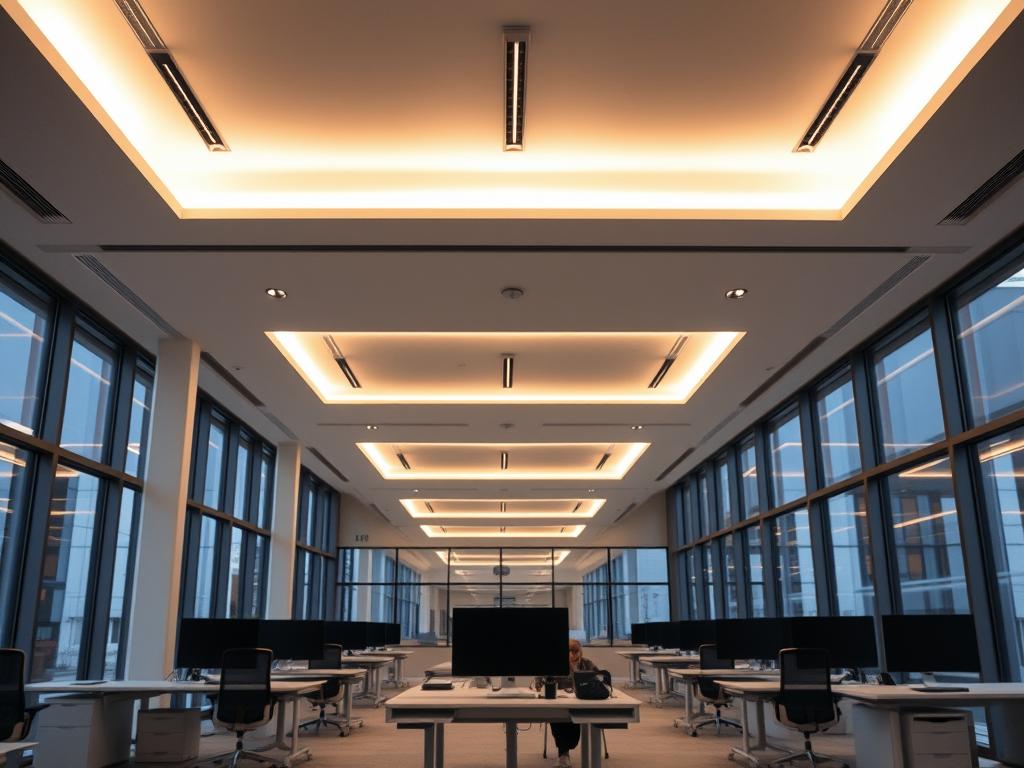
Smart lighting also saves money. It can cut energy costs by40-60%. This is because it uses less power and lasts longer.
These savings can pay for the system. They come from:
- Less energy use
- Longer-lasting lights
- Less heat from lights
- Money back from energy rebates
Systems that Adjust to Work Conditions
Modern lighting is smart because it changes with the office. It uses sensors to turn lights on and off. This saves energy when no one is there.
It also adjusts to natural light. Photosensors help it use less artificial light when it’s sunny. This keeps the light right all day.
It can even change colors to match the day. In the morning, it’s cool and bright. In the afternoon, it’s warmer. This helps us stay focused and alert.
There are many ways to set it up. You can choose wireless for easy install or wired for reliability. You can control it all from your phone or a central system.
Advanced Conferencing Tools for Remote Work
In today’s world, remote work is common. Good conferencing tools are key for working together from afar. The pandemic made virtual meetings a must, not just a nice-to-have. Now, we have tools that make remote meetings feel like being in the same room.
These tools do more than just video calls. They use smart tech to make team talks better. This helps teams stay productive and connected, no matter where they are.
High-Quality Audio and Video Technology
Good virtual meetings need clear sound and video. Now, we have cameras that show faces and body language well. The Jabra PanaCast Camera is a great example, with its wide view and three-lens setup.
Microphones that focus on speakers and block out background noise are a big help. This makes sure everyone is heard clearly. Some tools even make voices sound like they’re coming from the screen, making talks feel more natural.
Voice-activated tools make meetings easier. You can start and control meetings with just your voice. This is super helpful when you’re giving a presentation and don’t want to mess with controls.
Easy Integration with Software Platforms
The best conferencing tools work well with popular apps. They easily connect with Microsoft Teams, Zoom, and Google Meet. This makes meetings smoother and keeps your tech setup consistent.
Open APIs are key for working with other tools. They let conferencing gear talk to:
- Calendar and scheduling systems
- Room booking applications
- Attendance tracking software
- Document sharing platforms
- Project management tools
Different spaces need different tech. For example, personal desks need good webcams and headsets. But big meeting rooms need more advanced setups.
Companies that use these tools well see big improvements. A financial firm saw their meeting start times drop by 78% and team engagement go up by 42%.
As more people work remotely, investing in top-notch conferencing tools is key. These tools help teams work better together, which boosts the whole company’s performance and happiness.
Smart Printers for the Modern Office
Smart printers are key in today’s offices. They help make work easier and save money. These devices work well with other office tools, making work better and cheaper.
Features that Maximize Efficiency
Smart printers have cool features to help work flow better. You can print from phones, tablets, or laptops without being near the printer. This helps workers who are always on the move.
Cloud printing is another big plus. You can print from services like Google Drive or Dropbox without downloading files first. This saves time and makes work smoother.
Smart printers also manage their own supplies. They check ink and toner levels and order more when needed. This stops work from being slowed down by running out of supplies.
Voice commands make using smart printers easy. You can start printing with just your voice, thanks to Amazon Alexa or Google Assistant. This is great in busy offices where you need to do many things at once.
Smart printers can also send documents to the right place. For example, they can send accounting papers to the finance team. This saves time and keeps documents in order.
Cost-Effective Printing Solutions
Smart printers help save money in many ways. They print on both sides of paper, which cuts down on paper use. This can save up to 50% on paper costs and helps the environment.
They also stop unauthorized printing. This means only the right people can print, saving paper and keeping documents safe. Users must prove who they are before printing.
These printers also track how much you print. This helps control costs and make sure printing expenses are fair. They even have tools to help find ways to print less.
They can also fix problems before they happen. This means less downtime and fewer expensive repairs. It helps your printer last longer.
They also save energy. They turn off when not in use and start up fast. Many are even ENERGY STAR certified, which means they’re good for the planet and your wallet.
The Canon Pixma TR150 is a great example of a smart printer. It prints well and is easy to set up with Wi-Fi. Wireless scanners also make printing faster and more efficient.
When choosing smart printers, think about how much you print and how you work. Small businesses might want small, all-in-one printers. Big companies might need bigger printers with more features. But always check the security features, like encryption and network protection.
Security Features in Smart Office Devices
Smart devices in offices bring up big security worries. Workplaces are getting more connected, so security needs to keep up. Smart tech offers new ways to tackle these issues but needs careful setup to avoid new dangers.
Importance of Cybersecurity
Connected devices in offices can be a risk for cyber attacks. These attacks can harm important business data. Encryption standards and secure boot are key to protecting these devices.
Keeping devices up to date is vital for security. Many makers offer updates automatically. This keeps your devices safe from new threats without needing you to do anything.
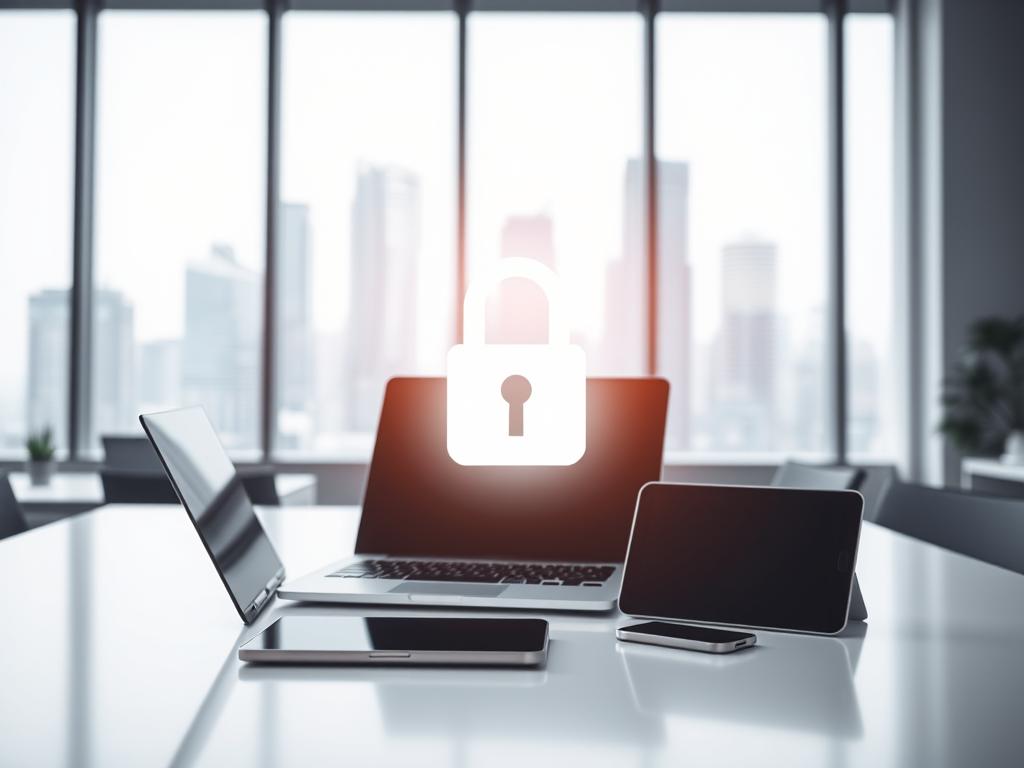
Network segmentation is another key strategy. It keeps IoT devices separate from sensitive info. Smart plugs and other simple devices can be overlooked but are risky if hacked.
Good device security includes:
- Multi-factor authentication
- Strong passwords
- Biometric checks
- Role-based access
- Regular security checks
Devices that Enhance Physical Security
Smart tech also boosts physical security. Biometric systems like fingerprints or facial scans control access. They keep detailed logs for accountability.
Smart surveillance with AI can spot odd behavior and alert security. These systems cut down on false alarms and catch real threats better.
Smart tech also helps in emergencies. It can lock down areas, call authorities, and guide people to safety. These systems work together to handle different threats smartly.
Smart storage solutions keep physical documents safe. Some have fingerprint sensors like the Samsung T7. This makes accessing important items easy and secure.
It’s important to make security easy to use. Too hard security can lead to people finding ways around it. Easy-to-use systems help everyone follow the rules.
Privacy is also key in security planning. Smart sensors and monitoring collect a lot of data. Clear policies on data use help keep trust and security.
Eco-Friendly Smart Office Devices
Smart office devices are key to both tech progress and caring for our planet. They help companies cut down on pollution and work better. These devices are now a big part of being green in the office.
Benefits of Sustainability
Using smart office tech brings big environmental wins. It cuts down on pollution, uses less resources, and makes less waste. Studies show smart buildings can use 30% less energy than old ones.
Going green also helps businesses save money. Companies see big cuts in bills and costs. They can start seeing savings in just a year or two.
Being green also helps companies follow the law. Laws are getting stricter about being eco-friendly. Companies that act early stay ahead of these rules.
Going green also makes a company a better place to work. Studies show young workers want to work for green companies. Companies that care about the planet attract and keep the best workers.
Devices that Reduce Energy Consumption
Smart lighting is a big player in saving energy. It uses sensors and timers to turn off lights when not needed. This makes the office brighter and saves energy.
Smart HVAC systems also save a lot of energy. They use data to control the temperature just right. This can cut down heating and cooling costs by 20-40%.
Smart power management stops devices from wasting energy when not in use. It turns off computers and other devices when not needed. This stops energy waste.
Building management systems tie all these techs together. They help manage energy use across the whole building. They also help find ways to use less energy.
Choosing the right smart office tech is important. Look at how it’s made, how long it lasts, and what happens to it when it’s done. Tech made to last and be recycled is best for the planet.
To get the most from smart office tech, track how it’s doing. Watch energy use, waste, and pollution. This shows how green you are and helps keep the investment going.
Future Trends in Smart Office Technology
Smart office technology is changing fast. It’s moving from simple tools to smart spaces that help us work better. Artificial intelligence, Internet of Things, and design that focuses on people are leading this change.
The future office will use advanced tech to help us work and feel good. New tools will make our work easier and more personal. They will also help us care for the planet and balance work and life.
Evolution of Smart Devices in Workspaces
Smart office tech has grown a lot. It’s now a network that learns and changes. This growth is speeding up as AI and machine learning get better and more available.
Voice-activated tools are getting smarter. They can now understand more than just simple commands. They can remember things and help in work activities.
Soon, these tools will join meetings and help take notes. They will even share ideas based on what they know. They will understand what’s being said and what’s important.
These tools might also know when we’re stressed. They could suggest breaks or change the room to help us relax. This makes workspaces that really care about us.
Predictions for Upcoming Innovations
Even more exciting tech is coming. It will change how we work and what offices look like.
- Ambient computing environments where tech is always there but not in the way
- Augmented reality overlays that add digital info to our space
- Biometric systems that adjust things like lighting and temperature for us
- Predictive workplace analytics that help us use space better
- Immersive telepresence for better remote meetings
This tech will change offices and how we work together. Offices might change shape every day. Meetings could feel like you’re right there, even if you’re not.
But, there are big challenges too. We’ll have to think about privacy and make sure everyone has access to tech. Offices need to be fair for everyone.
Keeping human connection is key. Offices should make us better at work, not just replace us. We need to design spaces that help us be creative and happy.
Conclusion: Transforming the Workplace with Smart Devices
Smart office devices change how we design and run workplaces. They make work more efficient and productive. Tools like these remove old barriers that slow things down.
Summary of Key Points
Smart office tech brings quick benefits. For example, smart desks help with posture and lighting reduces eye strain. These changes help employees work better and feel better.
Smart devices make work flow smoothly. Employees do less repetitive work and more important tasks. This makes them happier and more likely to stay.
Call to Action for Businesses
Start by finding what slows you down at work. Look at tasks that take too long and cause frustration. These are the best places to start changing.
Start small with big changes. Try smart printers or better conference room systems. Get your team involved to make sure it meets their needs.
Track how well these changes work. Look at how much time and money you save, and what your team says. Keep making your office smarter, bit by bit.