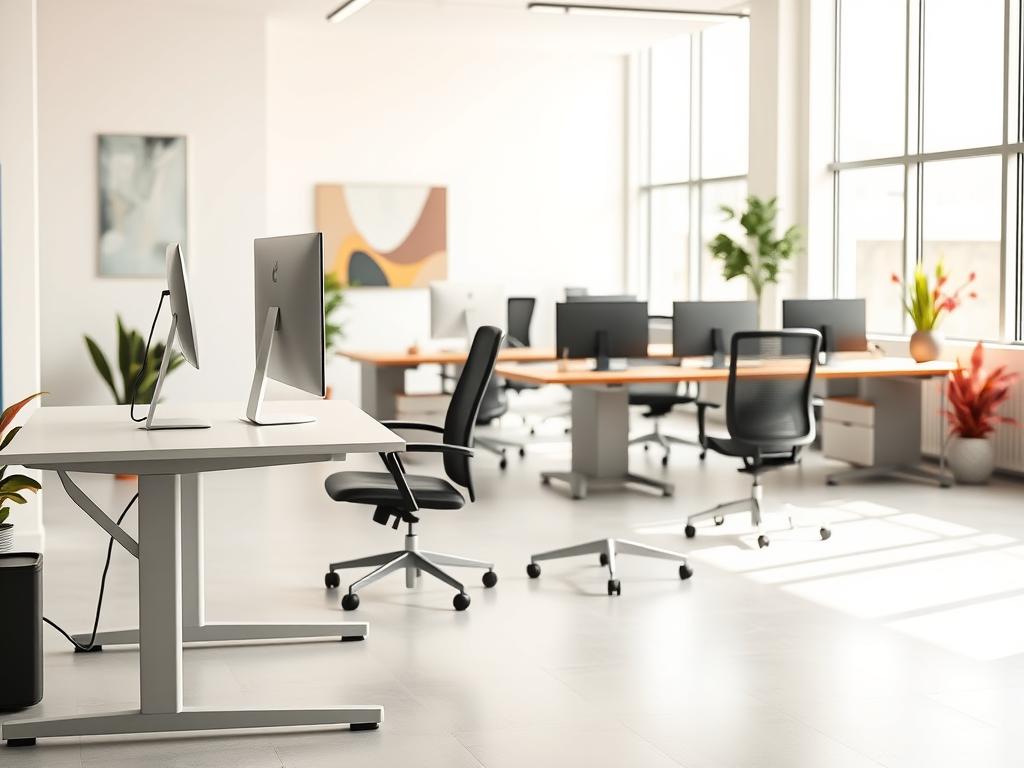
The design of a workspace greatly affects how people work. A well-arranged space is more than a place to work. It’s a catalyst for success. Companies that focus on productivity layout help their teams succeed.
Today’s workspaces are different from the old cubicle farms. They mix personal areas with places for teamwork, technology, and comfort.
Studies show that space design impacts happiness, communication, and work output. A good design cuts down on distractions and boosts the right interactions.
Redesigning or planning a new space? Knowing basic design rules can change your workplace. The next parts will share tips for any company to improve their space and team performance.
Understanding the Importance of Office Layout
Office layout design is more than looks—it’s a key business choice. It affects how well employees work, interact, and feel. A productivity layout balances practical and psychological needs, helping the business and employees.
Good design can cut costs, improve teamwork, and help the business grow. It’s all about creating a space that works for everyone.
The Impact on Employee Productivity
The way an office is set up affects how well employees do their jobs. Smart layouts mean less time moving around and more time working. This makes work easier and faster.
Research shows better workspaces can make employees 15% more productive. This is because they focus better, have fewer distractions, and work more smoothly. For example, having departments close together helps solve problems faster.
Good workspaces also have the right lighting, sound, and furniture. These things help employees stay focused and comfortable all day.
Enhancing Collaboration and Communication
Office layouts shape how teams work together and share ideas. Good design can help or hurt teamwork, which is key for creative companies. Spaces for meetings, chats, and projects help ideas flow.
It’s important to have both private and shared areas. Open spaces help everyone see what’s going on, while quiet spots are for focused work. This meets different needs and styles.
Companies like Google and Microsoft show that good collaboration areas boost teamwork by 25%. This leads to new ideas and solutions. The goal is to encourage teamwork naturally.
Effects on Employee Morale
Office design affects how happy and comfortable employees are. Spaces that care about comfort and preferences lead to happier, less stressed workers. This keeps them happy and loyal to the company.
Spaces with natural light, plants, and comfy areas show employees are valued. A study found happy workspaces make employees 16% more likely to be job-satisfied.
Office design also sends messages about company values. Spaces that show teamwork or care for the environment make employees feel part of something bigger. This sense of purpose strengthens the workplace culture.
When employees feel supported and comfortable, they bond with the company. This leads to better engagement, less absence, and a happier workplace. All these things help the company succeed in the long run.
Types of Office Layouts
Today, businesses have many office layout options. Each style has its own benefits for different needs. The right layout can boost productivity, teamwork, and show off a company’s culture.
Open-Plan Design
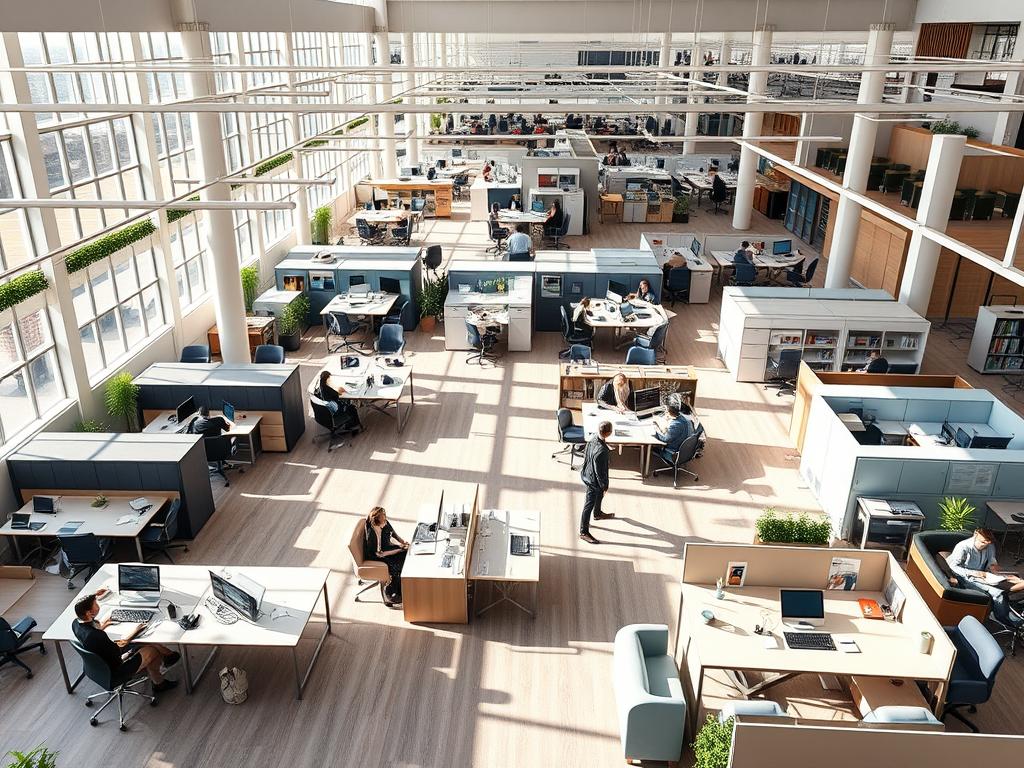
The open office design is very popular now. It has big, open spaces where people work together without walls. This setup encourages talking and sharing ideas.
Open layouts help with communication. Team members can easily talk and share ideas. It also saves space, which is great for small offices.
But, open plans have downsides. The noise can be too much. It’s hard to focus when there’s always chatter.
Variations of open plans include:
- Hot-desking – where employees pick a desk each day
- Activity-based working – different zones for different tasks
- Team pods – semi-open areas for teams
Cubicle Layout
Cubicles are a mix between open and private spaces. They have walls that are not too high. This gives a bit of privacy but also lets people talk.
Cubicles help with focus. They block out distractions and offer privacy for calls. They use less space than private offices.
For small office design, cubicles are flexible. They can be made in many sizes to fit small spaces. Modern cubicles are thinner and lower, making spaces feel more open.
But, cubicles can feel isolating. They might make people unhappy if they’re not done right. It’s important to have enough space and make them look nice.
Hybrid Spaces
Many offices now use hybrid designs. These mix different layouts to meet various needs. They offer flexible spaces for different work styles.
A good hybrid space might have:
- Open areas for team talks
- Quiet spots for focused work
- Meeting rooms for formal talks
- Lounge areas for casual chats
- Private booths for calls
Hybrid spaces let employees work in the best way for each task. They offer variety and choice. This makes work better for everyone.
Hybrid spaces work well if done right. They need good planning and clear rules. This way, they combine the good parts of different layouts without the bad.
Key Principles of Office Space Design
Good office spaces focus on people and work goals. Layouts set the stage, but key principles make the space work well for everyone. These elements help create efficient workspaces that boost productivity, health, and teamwork, no matter the layout.
Functionality and Accessibility
Office design should help employees do their jobs well. Spaces should fit the work flow and remove things that slow it down. It’s important to think about how people move and use the space all day.
It’s also key for all employees to move around easily. This means:
- Wide paths for people with mobility issues
- Adjustable desks for different needs
- Clear signs and easy-to-follow paths
- Features for people with disabilities
- Smart placement of shared items
In small office design, keeping things functional is just as important. Smart planning can make the most of small spaces by cutting out what’s not needed. Using areas for more than one thing and smart storage helps small offices stay useful and easy to get around.
Flexibility in Workspaces
Today’s work world changes fast, and offices should too. Spaces that can change with the team, projects, and work styles are best. They don’t need expensive updates to change.
Modular furniture is key to flexible design. It can be moved around as needed, letting teams change their space fast. Examples include:
- Movable walls for meetings
- Desks and tables that roll
- Stackable chairs for storage
- Areas that can be used in different ways
This flexibility also applies to tech. Wireless, lots of power, and easy connections keep spaces useful no matter how they’re set up. In efficient workspaces, being flexible means being ready for change and better.
Natural Lighting and Air Quality
Light and air affect how well we think and feel at work. Natural light is very important. Spaces with lots of daylight have many benefits:
- Less eye strain and headaches
- Better mood and energy
- Helps with sleep cycles
- Uses less artificial light
Using plants and natural elements in design can also help. Being near nature reduces stress and boosts thinking skills, making work better.
Clean air is also key. Good ventilation, air cleaners, and control of humidity keep air fresh. Even in small office design, having windows and good air flow makes people feel better and more alert.
Good light and air aren’t just nice to have. They’re important for how well people work. Offices with lots of natural light and clean air have happier, healthier teams.
Incorporating Technology in Office Layout
Technology is now key in making offices productive. Today’s offices need digital tools for work. Companies that focus on tech create better workspaces.
These spaces help employees work well together. They stay comfortable all day. Adding tech wisely boosts work efficiency and happiness.
Smart Office Solutions
Smart office tech is changing office design. It makes spaces that fit employee needs and use resources well. It also helps gather data on how spaces are used.
Good smart office tech includes:
- IoT-enabled environments with sensors that track who’s there and when
- Automated lighting and climate control that change with who’s around and the time
- Space utilization analytics to find unused areas and ways to use them better
- Smart booking systems for meeting rooms and desks
- Digital wayfinding solutions to help find your way in big offices
Companies using these techs see up to 30% better space use. They also save a lot on energy. The trick is to pick tech that solves real problems, not just for fun.
Utilizing Virtual Collaboration Tools
Remote and hybrid work is common now. Offices need to support working together online. They need special areas for digital teamwork.
Good virtual teamwork needs:
- Video conferencing zones with good lighting, sound, and backgrounds
- Digital whiteboard stations for everyone to contribute, no matter where they are
- Audio enhancement systems for clear talk without disturbing others
- Content sharing capabilities for easy sharing of presentations and documents
The best offices have these features everywhere, not just in meeting rooms. This lets employees work with remote teams easily from anywhere.
The Role of Ergonomics
Workspaces with lots of tech need to focus on ergonomics. This keeps workers healthy and productive. The setup of tech is key to avoiding injuries.
Good ergonomics for tech spaces include:
- Proper monitor positioning to avoid neck pain
- Adjustable keyboard and mouse placement for healthy wrists
- Cable management solutions to avoid tripping and mess
- Adaptable furniture for different body types and work styles
- Lighting design to reduce eye strain from screens
Companies that focus on ergonomics see fewer injuries and less time off. Workers in ergonomic spaces are happier and more productive.
The best offices plan tech from the start. This creates efficient spaces that support digital work and keep workers comfortable. This way, tech helps, not hinders, work.
Space Planning Strategies
Good space planning is key to a successful office. It makes every inch useful and happy for employees. Effective office organization means work flows well and people are productive. A smart layout saves space and boosts your business.
Great office designs mix function with space use. Even in small spaces, smart planning can turn limits into benefits. Small office design needs careful thought, as every choice matters more when space is tight.
Zone Separation: Quiet vs. Collaborative Areas
Different work areas are essential in modern offices. People need quiet spots and places to work together. It’s important to separate these areas well.
Using dividers is a smart way to create zones without walls. Here are some ideas:
- Modular furniture that changes as needed
- Bookshelf dividers that also store things
- Decorative screens that add style and define spaces
- Plants that improve air and act as natural barriers
- Acoustic panels that cut down on noise
The goal is to separate areas without isolating teams. Semi-clear dividers keep things open while setting boundaries. For small office design, use furniture that offers privacy and serves more than one purpose.
Strategic Placement of Shared Resources
Where you put shared equipment affects work flow and team interactions. Printers and other shared items should be in spots that don’t disrupt work but encourage team chats.
Here are some tips for placing resources:
- Put printers in quiet areas but not in the middle of work zones
- Make supply stations at spots where people naturally meet
- Place meeting rooms away from main work areas to keep noise down
- Design break areas that are easy to get to but not too close to work
- Use clear signs to show what each area is for
In small offices, finding multi-use solutions is key. A kitchenette can also be a meeting spot, and storage can act as a divider. This way, you get more out of less space.
Traffic Flow and Circulation
How people move through your office affects both work efficiency and team interactions. Good paths prevent jams and encourage teamwork. Think of your office’s paths as its blood flow—they should move people smoothly.
Good flow planning includes:
- Wide main paths for easy movement (at least 5 feet)
- Secondary paths that link related areas directly
- Points where people can meet and chat
- Clear views to help people find their way
- Buffer zones between busy and quiet areas
Watch how people move naturally through your space. The best layouts follow these paths, not fight them. In small spaces, flexible furniture can make temporary paths as needs change.
Circulation isn’t just about moving people—it’s also about sparking ideas. A good path might have small areas for quick chats without blocking the way.
Review your office layout often as your team grows or changes. The best offices adapt to new needs while keeping good flow. Even small spaces can handle many activities and help teams succeed.
Design Elements that Boost Productivity
Design elements in an office can make a big difference. They turn a simple space into a place that boosts performance. The right design choices make employees feel, think, and work better.
Color Psychology in the Workplace
Colors around us affect our mood and how we think. In offices, colors should be chosen carefully. Different colors make us feel and think in different ways.
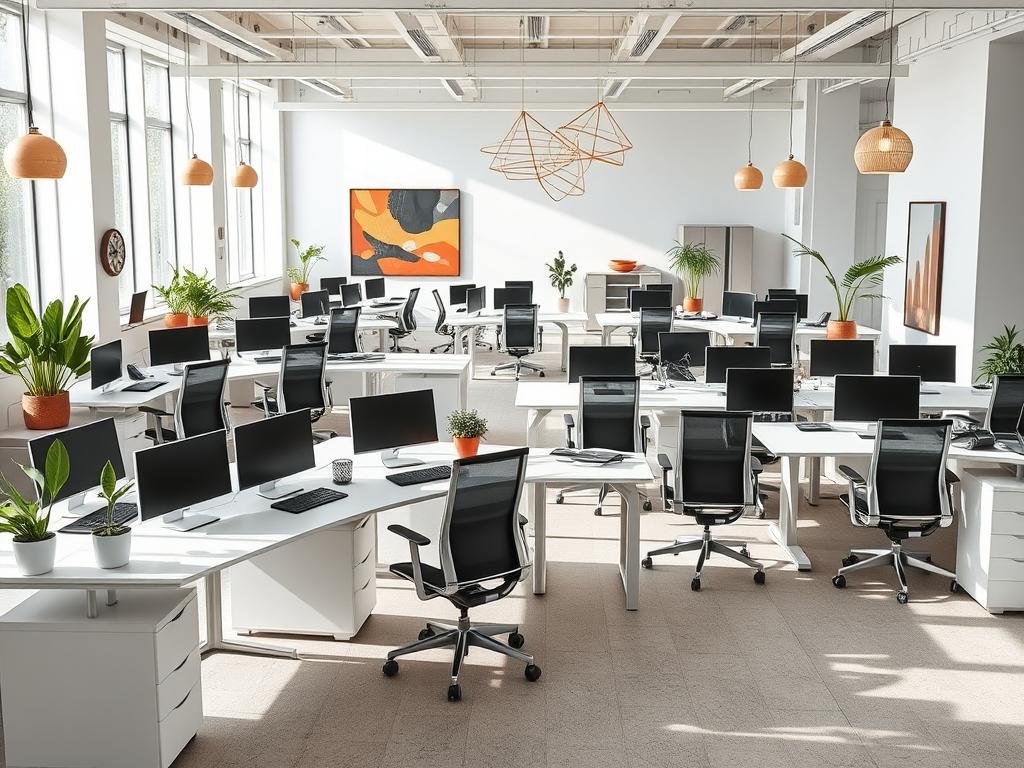
Soft blues and greens help us focus and think clearly. They make us calm and reduce stress. On the other hand, oranges and yellows make us feel energetic and creative.
Neutral colors like white, gray, and beige are versatile. They let you add brighter colors to focus attention. Using accent walls or colored furniture can guide people without walls.
Lighting is key to making colors work. Natural light shows colors well and improves mood. Artificial light can also be adjusted to match the mood of each area.
Furniture Choices that Inspire Creativity
Furniture in an office does more than just provide a place to sit. It shapes how we behave, feel comfortable, and think creatively. Good furniture encourages teamwork, supports good posture, and sparks new ideas.
Choosing furniture that fits our bodies is important. Adjustable chairs and desks help us stay comfortable all day. This comfort helps us stay focused and productive.
Furniture that can change helps offices stay flexible. Modular pieces let teams adjust their space as needed. This makes offices adaptable and supports teamwork.
The look of furniture also matters. Unusual shapes and designs can spark creativity. Mixing different types of seating keeps things interesting and supports different work styles.
Incorporation of Nature and Biophilic Design
Being close to nature is good for us, but offices often forget this. Biophilic design brings nature into offices, improving productivity and wellbeing. Studies show nature reduces stress, boosts focus, and helps solve problems.
Plants are a simple way to add nature to offices. They clean the air and make spaces look nice. Plants also help divide spaces without using walls.
Using natural materials like wood and bamboo adds texture and interest. These materials make offices feel more real and engaging. They are better than synthetic materials.
Even without real nature, elements that remind us of it can help. Views of outdoors, nature photos, or digital scenes can reduce stress. Sounds and patterns that feel natural also help us feel connected.
Adding biophilic elements helps offices focus on wellbeing and performance. By connecting us to nature, offices can make us feel more alive and creative.
Customizing Offices for Different Teams
Every department needs its own space based on its work. When setting up an office, it’s key to know what each team needs. This way, you can make efficient workspaces that help everyone do their best.
It’s all about making the workspace fit the people who use it. Happy employees are more productive. A space that makes you feel good can make you work better.
Tailoring Spaces for Creative Teams
Creative teams like design and marketing need spaces that spark ideas. They need areas for brainstorming and showing off ideas. A good efficient workspace for them has lots of room for creativity.
Here are some things to add for creative teams:
- Movable furniture for changing layouts
- Space for pinboards and whiteboards
- Comfortable areas for chatting
- Places to store materials and ideas
- Quiet spots for focused work
It’s important to have both places for teamwork and quiet spots. This helps creative work flow well.
Configuring Areas for Project Management
Project management teams need spaces for planning and meetings. Their efficient workspaces should help them work together and focus. They need to be easy to get to by other teams.
Good project management spaces have:
- Meeting areas with planning tools
- Flexible rooms for different sizes
- Quiet spots for detailed work
- Good locations near other teams
- Systems to track progress
The layout should help with the fast pace of project work. It should make it easy to switch between team work and solo tasks. Good office organization for these teams means clear communication and visibility.
Adjusting Work Environments for IT Departments
IT teams need spaces that are both technical and collaborative. Their workspaces should have the right equipment and support both teamwork and focus. It’s important to manage cables, think about security, and have ergonomic setups.
Consider these things for IT department layouts:
- Enough power and network
- Secure areas for servers
- Quiet zones for programming
- Spaces for teamwork and sharing
- Comfortable workstations for long hours
The best IT environments are both functional and comfortable. Good office organization includes good air, lighting, and spaces for both work and team time.
Getting input from team members is key to making great spaces. Instead of using the same layout everywhere, listen to what each team needs. Their ideas will make the space better for everyone.
When teams feel their needs are met, they love their workspace more. This makes them work better, creating a cycle of happiness and success.
The Role of Break Areas in Office Layout
In today’s office organization, break spaces boost productivity, not just offer a break. Studies show that taking breaks can make us more creative and productive. These areas help build community, support mental health, and drive success.
Break areas are key to investing in employees. They let workers recharge, connect with others, and focus better. Even in open office design, having these areas improves job satisfaction and keeps employees.
Designing Relaxation Zones
Relaxation zones in the office are like sanctuaries. They help prevent burnout and keep minds sharp. These areas should have soft lighting, comfy seats, and soundproofing to reduce noise.
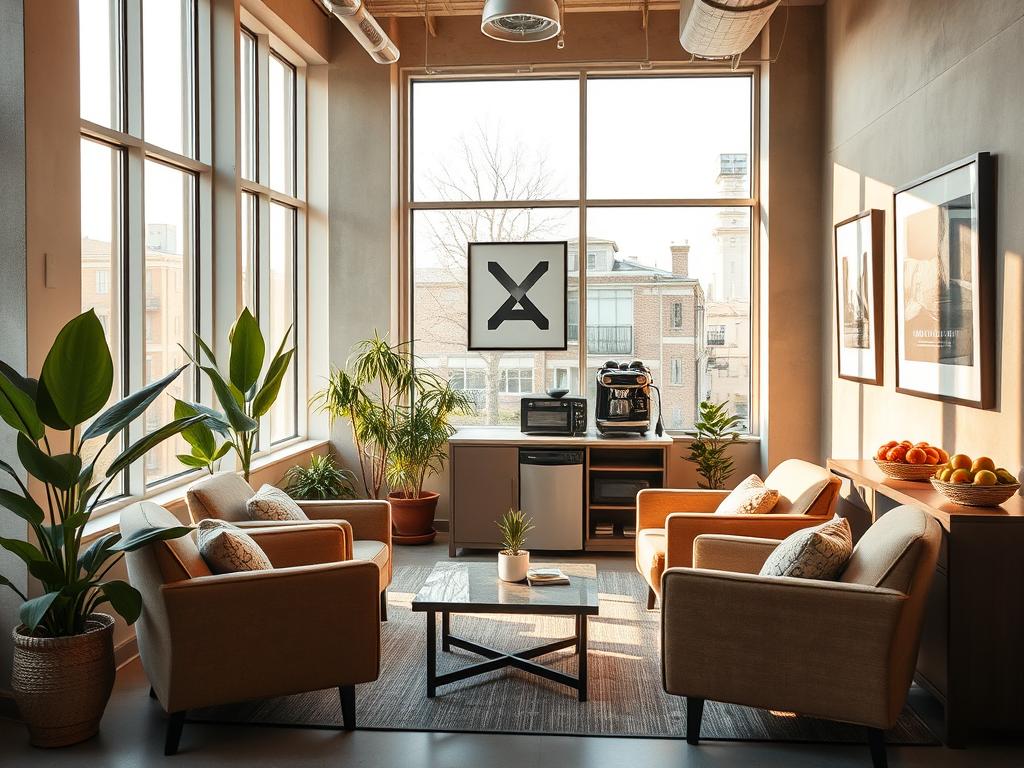
- Comfortable, varied seating options that accommodate different postures and preferences
- Natural elements like plants, water features, or nature views that reduce stress
- Sensory considerations such as soothing colors, pleasant scents, and sound management
- Flexible spaces that can accommodate both solitary reflection and quiet conversation
Companies with relaxation zones see better focus and problem-solving. These areas give team members a chance to clear their minds. The design of office break rooms greatly affects how well employees relax during the day.
Importance of Inspiring Cafeterias
Cafeterias are more than just places to eat. They are social hubs that help teams connect. Well-designed eating spaces encourage conversations and build relationships.
A great cafeteria should look good and work well. It should have different seating for all kinds of conversations. This supports various ways of interacting.
Quality amenities show employees that their wellbeing is important. Healthy food, good kitchen tools, and comfy furniture show values. These investments help innovation grow through casual conversations.
Balancing Work and Leisure
Modern companies know that fun spaces help productivity. Game areas, outdoor spaces, and fitness zones keep people moving. This helps fight the health problems of sitting too much and refreshes the mind.
These spaces help in many ways:
- Encouraging brief physical activity that improves circulation and reduces musculoskeletal issues
- Creating neutral territory for cross-team socialization and relationship building
- Providing appropriate outlets for stress relief during challenging projects
- Supporting recruitment efforts by demonstrating commitment to work-life balance
The best approach mixes planned and spontaneous fun. Some like yoga or walking groups, while others prefer to find fun on their own. This variety keeps employees engaged and happy.
Companies that add fun to their office organization see better engagement and less absenteeism. These spaces meet the need for variety and stimulation. They create places where people can be themselves at work.
Sustainability in Office Design
Modern offices now focus on being green. This helps the planet and makes work better. Using eco-friendly designs is key for small offices. It shows a company cares and makes a healthier space that boosts work.
Eco-friendly Materials and Practices
Choosing green materials is the first step in a green office. Furniture from recycled wood or bamboo is stylish and eco-friendly. Many brands offer green options that are strong and look good.
Choosing the right flooring is also important. Cork and recycled carpeting are better for the planet. They also make the office more comfortable and quiet.
Think about a product’s whole life when buying. Look for things with little packaging and made locally. Green choices often save money in the long run.
Creating a Green Office Culture
Good design encourages people to be green at work. Having clear recycling spots helps everyone. This makes recycling easy and keeps the office clean.
Water stations and break rooms with reusable items cut down on waste. These small changes show a company cares about the environment.
Visual reminders in the office help people remember to be green. Displays on energy use and living walls improve air. These features make being green a part of daily life.
Energy-efficient Layout Choices
Planning the space well saves energy, even in small offices. Placing desks near windows cuts down on light use. Light colors and mirrors help bring in more natural light.
Designing zones for heat and cooling saves energy. Putting servers in one area keeps the rest cool. This makes the office comfortable and saves energy.
Using smart tech helps manage energy. Sensors and blinds adjust to light and temperature. This saves energy and keeps the office comfy.
Green design is good for business. It improves work and health. Being green is smart for companies that want to succeed.
Future Trends in Office Space Design
Companies are changing office layouts to focus on flexibility, tech, and employee health. The pandemic changed how we see workspaces. Now, companies are thinking differently about their physical spaces.
These new trends show how space affects work, teamwork, and happiness. They are important in our changing world.
Hybrid Work Models
Hybrid work has changed office design. Modern offices need to support both in-person and remote work. Companies are using smart systems to manage space better.
Digital tools are key for hybrid work. Good video calls, interactive boards, and clear audio make meetings better for everyone. This keeps remote workers involved.
Hybrid meeting zones are a big trend for 2025. They have special seating and tech for better meetings. The goal is to make remote workers feel included.
Learn more about office design trends for 2025 here.
Flexibility in Divide and Share Spaces
Old office layouts are fading away. Tomorrow’s offices will be flexible and changeable. Movable walls and furniture make spaces versatile.
Furniture is getting lighter and more mobile. This makes it easy to set up new work areas. Modular seating adds sound control without permanent changes.
Smart systems manage these flexible spaces. They use sensors and data to adjust layouts. This keeps the office up-to-date with real needs.
The Rise of Activity-Based Workspaces
Companies are moving to activity-based workspaces. This lets employees choose the best space for their task. It’s not just about one desk.
Focus pods offer quiet spaces for deep work. They have sound control and adjustable lights. Lounge areas encourage teamwork and creativity.
These spaces have different areas for different tasks. Standing desks and multimedia areas support various work styles. This lets employees work better and feel happier.
Adaptable office design is key for the future. Companies that adapt attract talent and stay innovative. The best offices will keep changing to meet new needs.
Evaluating and Adjusting Office Layouts
Good office organization sees workspace design as a living thing, not just a project. A great productivity layout changes with your needs and how people use it.
Gathering Employee Feedback
What your staff says is very important. Use surveys, focus groups, and online tools to get their views. They often spot things that designers might miss.
Measuring Productivity Outcomes
Keep track of how well your office works. Look at how tasks get done, how often people work together, and how much space is used. See how things change before and after you make changes.
Iterative Design Process for Continuous Improvement
Always be looking to improve your office setup. Make small changes based on what you learn. This way, your office can keep up with new tech, team changes, and work styles.
The best offices keep getting better. By seeing your layout as something that can change, you make a space that always supports your team. This keeps everyone productive over time.