The world of custom printing is changing fast. Small businesses are leading this change. As a business owner, you might feel the need to keep up with trends while watching your budget.
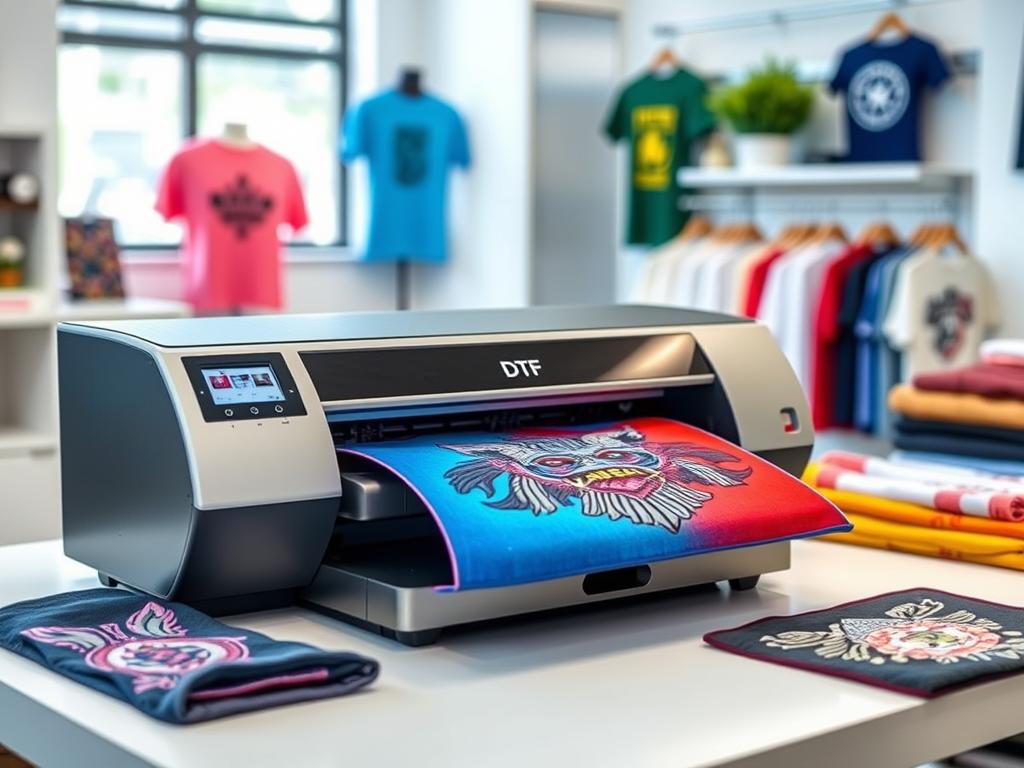
DTF printers are changing the game. They let you print bright, lasting designs on any fabric. This includes cotton tees and leather jackets, all without spending too much.
DTF printers are getting more popular. They come in sizes from 8 inches to 24 inches. This means there’s a perfect size for every business, big or small.
The Roland VersaSTUDIO BY-20 is a great example. It’s made for small businesses and home-based entrepreneurs. It offers top-notch DTF graphics without a huge cost. Custom DTF transfers start at just $2.75 each.
DTF printing is growing fast, with a 15% annual increase expected. This means a bright future for businesses using this tech. With great support and prices, starting is easier than ever. It’s not just about keeping up; it’s about standing out.
Let’s explore how DTF printing works and its benefits for small businesses. We’ll see how you can use it to improve your custom printing. Get ready to change your business with DTF printing.
Overview of DTF Printing Technology
DTF printing has changed the custom apparel world. It lets businesses print on many materials like cotton, polyester, and leather. This method gives high-quality prints at a lower cost than old ways.
Definition of DTF Printing
DTF means Direct to Film. It’s a way to print designs on a special film first. Then, it’s applied to the final product. The process uses special inks and powder for lasting, bright prints.
History of DTF Printing
DTF printing became popular fast among those who decorate clothes. It’s cheaper than Direct to Garment (DTG) printing. A full DTF kit costs under €1500, helping small businesses.
Evolution of DTF Printing Techniques
DTF printing has gotten better, offering top quality and flexibility. Today’s DTF printers use CMYK+W inks for bright colors. They print at 300 dpi for the best look. New improvements make prints last longer, even when clothes stretch.
The DTF printing world keeps growing, opening up new chances for custom prints. Its low cost and flexibility make it key for small business marketing and custom clothes.
How DTF Printers Work
Direct-to-film printers have changed the custom apparel world. They use special tech to make top-notch transfers for many materials. Knowing how they work is key for small businesses thinking about getting one.
Basic Principles of DTF Printing
DTF printing is different from other methods. It uses a special printer to put ink on a 0.75mm thick PET film. This film carries the design before it’s put on the final product.
DTF printers can make very detailed designs. They offer up to 80% more detail than old-school screen printing.
The DTF Printing Process
The DTF printing process is quick and flexible. Here’s how it works:
- Design Creation: Get the artwork ready with the right software.
- Printing: The printer puts the design on the PET film.
- Powder Application: A special powder is put on the wet ink.
- Curing: The film goes through heat to fix the ink and powder.
- Transfer: The design is pressed onto the final product with heat.
This easy process cuts down on prep work and mistakes. DTF printers with double heads can make 8-10 logo copies in 10 seconds. They’re perfect for small to medium-sized orders.
Benefits of Using DTF Printers
DTF printers are great for small businesses in the custom apparel world. They make high-quality prints, save money, and work on many things.
High-Quality Prints
DTF printers make bright and detailed graphics. These prints last a long time and don’t crack or flake. They’re perfect for things that get a lot of use.
Cost-Effectiveness for Small Businesses
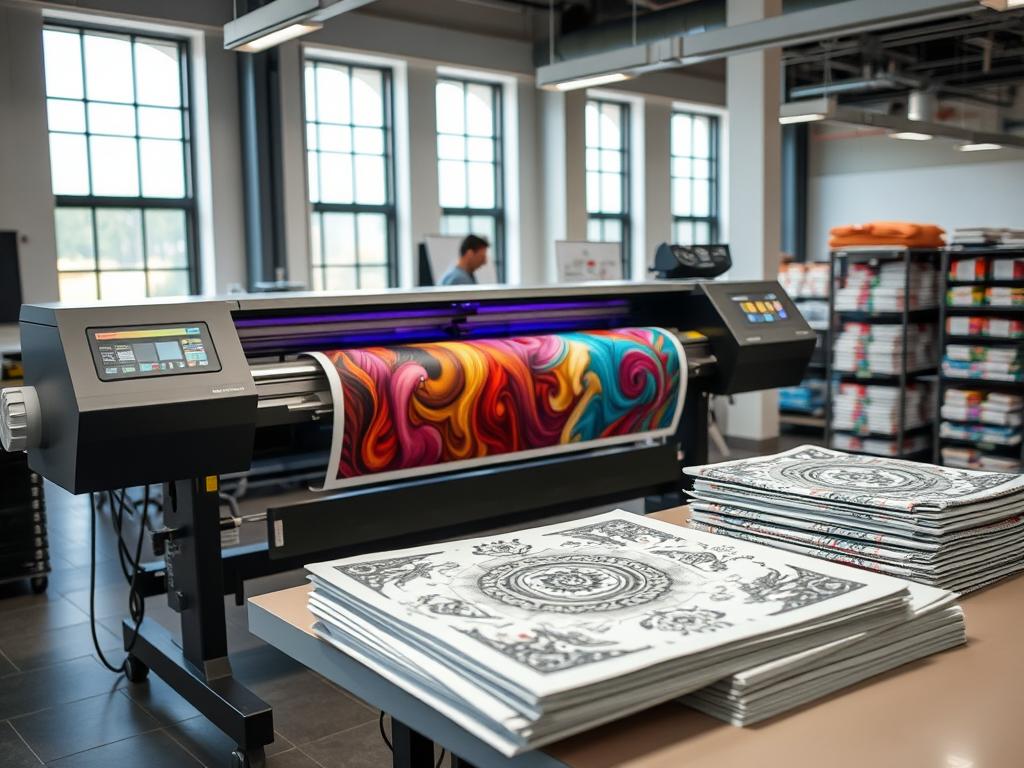
DTF printing saves money compared to old ways. For example, a 6-color, 10″x10″ print costs about $3.25. Screen printing costs around $13.44, saving over $200 for 20 shirts.
Material costs for DTF printing are low, from $0.75 to $1.00 per square foot. This is cheaper than other services or bulk orders.
Versatility of DTF Printing
DTF printers can print on many materials. This includes 100% cotton, blends, and 100% polyester. They work on both light and dark fabrics without extra steps.
The application process is fast, taking just 5-10 seconds with a heat press. DTF printing offers unlimited colors without extra cost. This is great for complex designs.
- Suitable for various fabric compositions
- Works on light and dark fabrics
- Quick application process
- Unlimited color options
DTF printers are a big help for small businesses wanting to improve their custom apparel making.
Preventing Unauthorized Access & Data Breach
In the world of DTF printing, keeping sensitive info safe is key. The DTF printing process deals with custom designs and client data. This makes security a big deal for small businesses.
Importance of Data Privacy in Printing
Data privacy in printing is more than just protecting designs. It’s also about keeping client info, financial data, and secret techniques safe. Secure printing helps lower the chance of leaking sensitive info in shared or public places.
Best Practices to Enhance Security
To make the DTF printing process safer, businesses should follow some important steps:
- Use encrypted printing to keep print jobs unreadable during transmission
- Implement authentication-based printing, requiring users to verify identity before retrieving prints
- Adopt follow-me printing, allowing job release from any network printer
- Utilize secure group printing to isolate the printing environment
- Employ auditing and tracking of printing activities to identify potential security threats
By using these steps, small businesses can keep their DTF printing safe and client data secure. Remember, the cost of secure printing solutions is worth it for better data protection and client trust.
Applications of DTF Printers
Direct-to-film printers have changed the game for custom clothes and promotional items. They are great for small businesses. They make it easy to print high-quality designs on many materials.
Use in Custom Apparel
DTF printers are amazing for custom clothes. They work on cotton, polyester, silk, and more. You don’t need expensive paper.
They make bright designs on both light and dark fabrics. This is perfect for t-shirts, hoodies, and sports jerseys.
DTF Printing for Promotional Products
DTF printers are not just for clothes. Small businesses can print on many items:
- Hats and caps
- Canvas bags and totes
- Flags and banners
- Koozies and beverage holders
- Masks and safety vests
Benefits for Small Business Marketing
DTF printing is great for marketing. It lets you print on tricky spots like pockets. You don’t need to prep the material first, saving time and money.
This tech helps businesses make special marketing stuff and custom items fast. Even if you only need a few.
With DTF printing, small businesses can offer more. Like custom onesies, bandanas, and shoes. The fast and good results make DTF printers a smart choice for marketing and more.
Business Tools & Software for DTF Printing
DTF printing needs strong software and tools to succeed. We’ll look at the best for design, color, and workflow.
Recommended Software Solutions
Adobe Illustrator is great for design. It’s vector-based, perfect for detailed work. Photoshop is best for photo editing, with advanced tools.
Affinity Designer is a good choice for those watching their budget. It’s bought once, not monthly.
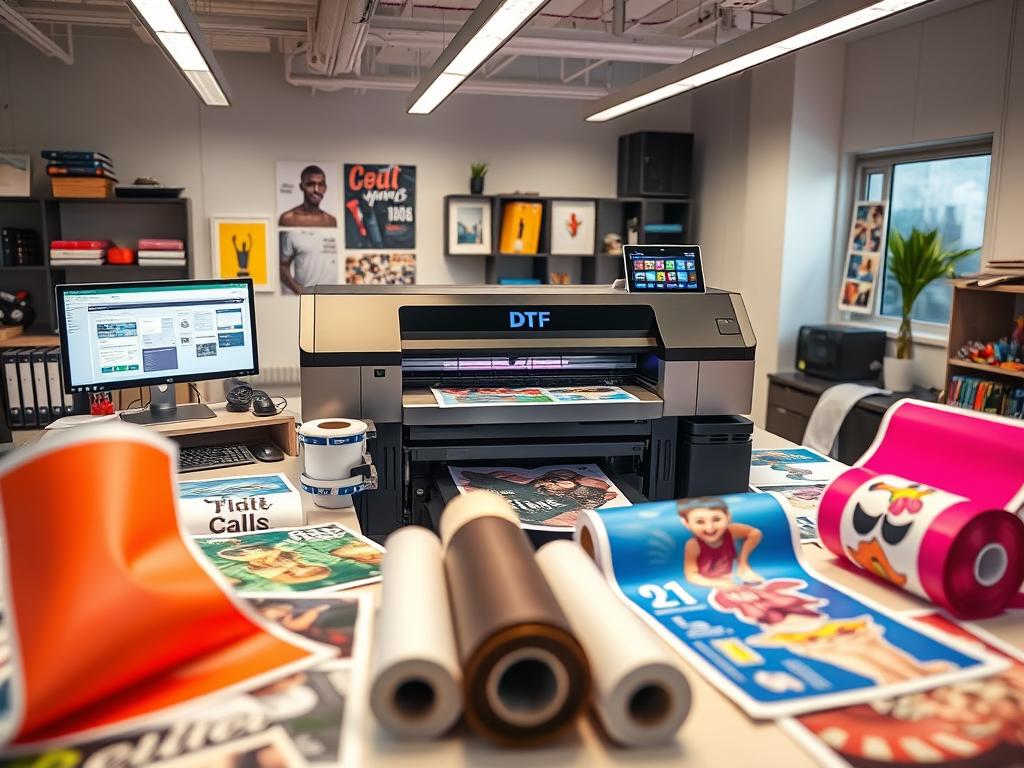
DecoNetwork is a top pick for DTF printing. It automates tasks like approvals and tracking. It also has a dashboard for managing orders and clients.
Essential Tools for DTF Printing Success
DTF printers need special hardware. Heat presses transfer designs to clothes. Curing equipment fixes the print.
Color tools keep prints consistent. Quality control tools ensure high standards.
- Heat presses for design transfer
- Curing equipment for print fixation
- Color calibration tools for consistency
- Quality control instruments
YoPrint helps with workflow. It has features for pricing and totals. It supports various printing needs.
Step-by-Step Guide to Setting Up a DTF Printer
Setting up a DTF printer is key for small businesses in custom apparel printing. This guide will help you from start to finish. You’ll learn how to set it up and solve common problems.
Preparing the Printer for Use
First, unpack your DTF printer and follow the assembly guide. Put in the DTF ink cartridges. Use high-quality inks that fit your printer.
Next, load the DTF film into the printer. Make sure it’s aligned right for the best print quality.
Initial Configuration Techniques
Now, set up your printer for top results. Adjust the temperature and time for melting the DTF powder. Also, tweak the color settings for bright prints.
Remember, use 100% white undercolor for all designs. Install RIP software to manage your print jobs well.
Troubleshooting Common Issues
If prints look bad, check your ink levels and clean the print heads. For transfer issues, check your heat press settings. Make sure they match the manufacturer’s advice.
If the powder doesn’t stick, check the type and amount of DTF powder you’re using. Fixing these problems will keep your DTF printing smooth.
Comparing DTF Printing with Other Technologies
Direct-to-film printers have changed the custom apparel world. They bring unique benefits over old printing ways. Let’s see how DTF printing compares to other popular methods.
DTF vs. Direct-to-Garment (DTG) Printing
DTF and DTG printing both make high-quality prints. But they are different in important ways. Direct-to-film printers are great for many fabrics like cotton and polyester. They also save money for big orders, perfect for small businesses.
DTF vs. Sublimation Printing
DTF printing beats sublimation in color and lasting power. DTF prints stay sharp even after many washes. It also works on more fabrics than sublimation.
- DTF printing achieves resolutions up to 1440 dpi
- Prints are fade-resistant and scratch-resistant
- Eco-friendly with water-based inks
- Low maintenance requirements
For small businesses, direct-to-film printers are a great choice. They offer quality, flexibility, and save money. Their ability to make bright, lasting prints on many materials makes them a top pick in the custom apparel field.
Unique Features of DTF Printers
DTF printers have special features that make them stand out. They are great for small businesses wanting to grow.
Transfer Methods and Material Compatibility
DTF printers use a unique transfer method. They can print on cotton, polyester, and blends without extra steps. This is more flexible than other methods.
The process prints designs on a film. Then, it’s transferred to fabric at 300-315°F for 10-13 seconds.
Customization and Design Options
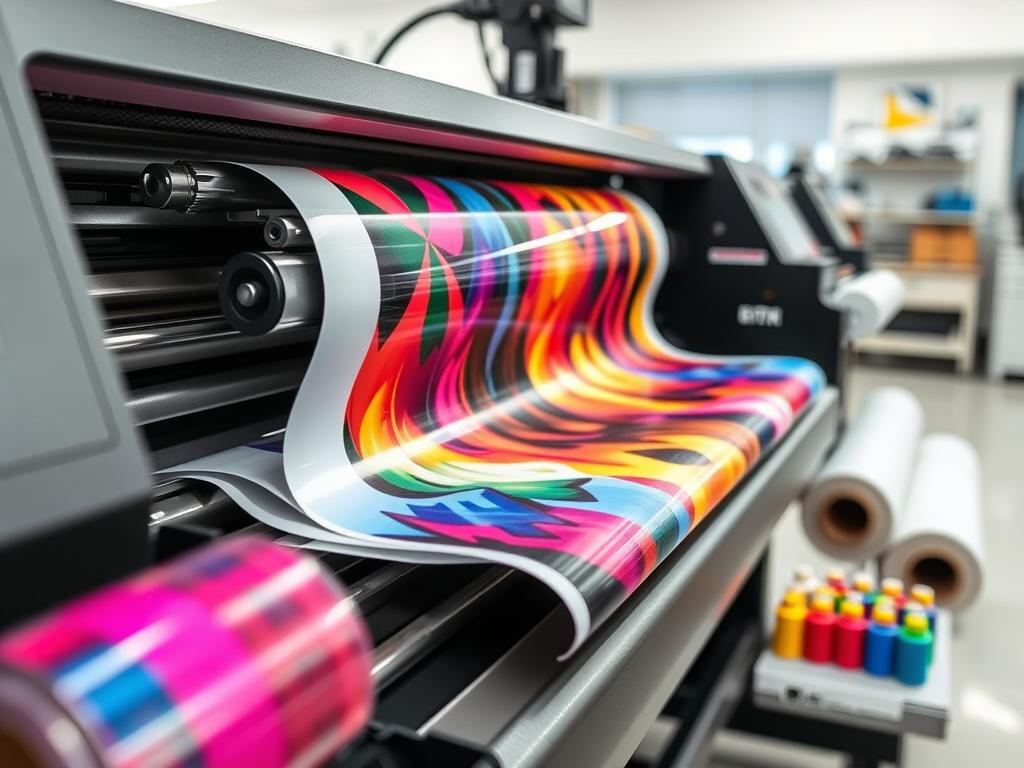
DTF printers offer endless customization options. They can make full-color designs with bright colors and smooth gradients. Some models, like the Epson SureColor P600, use 9-color ink for better colors.
DTF printing works on many materials. It’s perfect for custom clothes and promotional items. The prints last through many washes without fading. This makes DTF printers a great choice for small businesses to offer quality, personalized items.
Challenges and Limitations of DTF Printing
The DTF printing process has many benefits. But, it also has some challenges. Small businesses should know what they might face.
Initial Investment Costs
Starting a DTF printing business needs a big upfront investment. You’ll need a quality DTF printer and supplies like inks and transfer films. Make sure to budget well and think about your return on investment.
Understanding Equipment Maintenance
Keeping your DTF printer in good shape is key. If you don’t, your printing might not be as good. Some important tasks include:
- Cleaning printheads often to avoid clogs
- Calibrating the printer regularly for better colors
- Storing transfer films in cool, dry places to avoid wrinkles
By taking care of your printer, you can keep your prints looking great. This also helps your equipment last longer. By tackling these challenges, small businesses can make the most of DTF printing and give their customers top-notch products.
Usability of DTF Printers for Non-Tech Users
Direct-to-film printers are popular in the custom apparel world. They are easy to use, making them great for non-tech users and small businesses.
Simplifying the User Experience
Many makers of these printers aim for easy interfaces and simple setups. About 70% of new users like models that guide them through setup and offer support. These printers are also small, perfect for 60% of hobbyists and small business owners with little space.
Training Resources and Support
Most users, about 80%, say community support and tutorials are key to learning DTF printing. Joining DTF communities and attending workshops helps 65% of users improve their skills. Following care tips, like 90% of successful users do, keeps prints looking good longer.
These printers are also affordable for beginners. Prices start at $200 and go up to $1,500, depending on what they can do. This makes it easy for small businesses to try custom printing without spending a lot at first.
Future Trends in DTF Printing for Small Businesses
The DTF printer market is growing fast. Small businesses investing in this tech will see big growth and new features soon.
Innovations on the Horizon
DTF printer makers are making big leaps. New models can print up to 0.6 meters wide, great for big orders. They also have multiple printheads for faster, bigger prints.
Automation is a big focus. Faster printing and less waste are coming. These changes will make small businesses more efficient and profitable.
Market Growth and Potential Opportunities
The DTF printer market is expected to grow a lot. It will hit $627.8 million by 2030, growing 8.6% each year. North America is leading with a 14.7% growth in DTF machines.
Custom printing is getting more popular. This means more chances for small businesses to grow. DTF printers can make many products, from clothes to bags, offering new ways to make money.
AI:
Future Trends in DTF Printing for Small Businesses
The DTF printer market is ready for big growth. This offers great chances for small businesses. As tech gets better, new ways to print will emerge.
Innovations on the Horizon
DTF printer makers are pushing limits. New models can print up to 0.6 meters wide, ideal for big orders. They also have multiple printheads for faster, bigger prints.
Automation is changing DTF printing. Faster printing and less waste are coming. These changes will make small businesses more efficient and profitable.
Market Growth and Potential Opportunities
The DTF printer market is expected to grow a lot. It will hit $627.8 million by 2030, growing 8.6% each year. North America is leading with a 14.7% growth in DTF machines.
Custom printing is getting more popular. This means more chances for small businesses to grow. DTF printers can make many products, from clothes to bags, offering new ways to make money.
Notes
Direct-to-Film Printer:
In the world of print-on-demand, direct-to-film printers have revolutionized the way small businesses produce custom products. By using a thermal transfer process to apply vibrant images and designs directly onto film, these printers offer unparalleled speed, efficiency, and quality. With the ability to produce high-resolution prints in mere seconds, direct-to-film printers have become an essential tool for small businesses looking to stay competitive in the fast-paced digital landscape.
Best DTF Printers for Small Businesses:
When it comes to selecting the best direct-to-film (DTF) printer for your small business, there are several factors to consider. Look for printers that offer high print speeds, advanced image processing capabilities, and user-friendly interfaces. Some popular options include printers from brands like Epson, Roland, and Sawgrass, which offer a range of models with varying features and price points. By investing in a reliable DTF printer, you can unlock new opportunities for production and growth, while also staying ahead of the competition.
Top Features to Consider When Choosing a DTF Printer:
When shopping for a direct-to-film printer, there are several key features to consider in order to find the best fit for your business. First and foremost, look for printers that offer high print speeds and resolution, as well as advanced image processing capabilities like color matching and image correction. Additionally, consider the type of substrates you’ll be printing on most often, as some printers may have specific recommendations or limitations. Other important factors include ease of use, maintenance requirements, and compatibility with your existing materials and software.
FAQ
Q: What is DTF printing?
Q: How does a DTF printer work?
Q: What are the advantages of DTF printing for small businesses?
Q: How does DTF printing compare to other printing technologies?
Q: What types of products can be created using DTF printing?
Q: What is the initial investment cost for DTF printing?
Q: Is DTF printing suitable for non-technical users?
Q: How important is data security in DTF printing?
Q: What maintenance is required for DTF printers?
Q: What are the future trends in DTF printing for small businesses?
Source Links
- https://www.heatpressnation.com/collections/inkjet-dtf-printers?srsltid=AfmBOortgMEdMEOnXmHOKHUnBvM9f92GQo7SahvumCjT1hKRHb6-uGFm – DTF Printers
- https://dtfsuperstore.com/blogs/news/what-is-the-best-dtf-printer-for-small-businesses?srsltid=AfmBOoqXuwTcuZ2O_Jkx5U3umh6nGm45fPWgFoNfZMvZK-PRBH8WV5UR – What is the Best DTF Printer For Small Businesses? – DTFsuperstore.com
- https://www.brildor.com/blog/en/dtf-printing-game-changing-technique-for-your-business/?srsltid=AfmBOopUi-hC9eB_MDOVbtPcPvUTphorXpcKzm4U0YUEYZn8voOQPspo – 🤩DTF Printing: A Game-Changing Technique For Your T-Shirt Business – Blog Brildor
- https://www.veetrends.com/blog/what-is-dtf-printing?srsltid=AfmBOoqljAa-JPkziE1A5GJBUwFx3yEYTYPYnTW76ZNllzgynI2evk3J – What is DTF Printing? | Direct To Film Printers Explained
- https://ninjatransfers.com/pages/what-is-dtf-printing?srsltid=AfmBOoptrhPzis0zqqtBhcFclSLYe8llNuEX0d_LAoUz20ag0XIIt3uV – What is DTF Printing? Understanding The Innovative Tech
- https://limitlesstransfers.com/dtf-printing/what-is-a-dtf-printer-and-how-does-it-work/?srsltid=AfmBOoo50ka6biJRranwMOtiGxlPZpUspXLZdZ27PGfcTyyNSyQcbpBp – What Is A DTF Printer, And How Does It Work? – Limitless Transfers
- https://blog.ricoma.com/2024/04/28/how-does-dtf-printing-works/ – How Does DTF Printing Work?
- https://www.printmydtf.com/en/pages/dtf-printer?srsltid=AfmBOoqf6GHZWkh778GarjhPdA1VVRrwwqvpEhpCVSiNe1cGEYdSSQxK – DTF Printers: Complete Guide | PrintMyDTF
- https://dtfadvantage.com/blogs/news/the-pros-and-cons-of-dtf – The Pros and Cons of DTF Transfers
- https://lasertransfersupplies.com/blogs/articles/direct-to-film-dtf-printing-what-are-the-pros-and-cons – Direct-to-Film (DTF) Printing – What are the Pros and Cons?
- https://alphadtfprint.com/blogs/news/advanced-printing-technologies?srsltid=AfmBOoqfPFcFf_-yi_ZoRav_S34W_zCvkZ-Hs52ZmTuqvcBoPC5iMG_p – Enhancing Security through Advanced Printing Technologies
- https://trueimagetech.co.uk/blogs/all/what-is-secure-printing – What Is Secure Printing?
- https://coldesi.com/dtf-printing/direct-to-film-printers-explained-the-printer-dtf-process/ – Direct to Film Printers Explained | The Printer DTF Process
- https://www.allprintheads.com/blogs/news/different-applications-for-dtf-printing?srsltid=AfmBOoouVzoZ9zj6VLYhzbgI5s8xqDyoSRCyrgSLYM3Wgw1tqVfqqFDk – Different Applications for DTF Printing
- https://www.mtutech.com/DTF-Printer-Applications-Showcase/DTFPrinterApplicationIdeas-1133.html – DTF Printer Application Ideas
- https://www.deconetwork.com/your-new-favorite-business-software-for-dtf-printing/ – Your New Favorite Business Software For DTF Printing
- https://www.yoprint.com/direct-to-film-management-software – Software Made to Elevate DTF Printing Businesses | YoPrint
- https://ninjatransfers.com/pages/best-design-software-for-dtf-printing?srsltid=AfmBOop4aU4rHpRe6nU3zD9RdycDjtbEtcrAMaYi9IGyr6d2alw0lGga – Best Design Software for DTF Printing | A Guide
- https://screenprintdirect.com/blogs/screen_printing_101/direct-to-film-dtf-printing-process-step-by-step?srsltid=AfmBOooi41lbQ1_9iB5s1cCQUZW7eSxGdxpgT6R81Q8gDCeQRLYKukix – Direct to Film (DTF) Printing Process – Step by Step
- https://www.forever-ots.com/2023/11/18/mastering-dtf-printing-your-essential-step-by-step-setup-and-requirements-guide/ – Mastering DTF Printing: Your Essential Step-by-Step Setup and Requirements Guide – FOREVER GmbH
- https://fastdtftransfer.com/blogs/fast-dtf-blog/dtf-printing-transfer-vs-other-printing-methods-a-comparative-analysis?srsltid=AfmBOoqGTlZtn1MVC7d3kB-LUN6kWVwxguubXuSoBa7zumbJFfKSbpr7 – DTF Printing Transfer vs. Other Printing Methods: A Comparative Analysis
- https://www.cobraflexprinters.com/what-sets-dtf-printers-apart-from-other-printing-technologies/ – What Sets DTF Printers Apart From Other Printing Technologies?
- https://dtfprintco.com/8-essential-features-to-look-for-in-a-dtf-printer/?srsltid=AfmBOoo3FHUagjKuxQ5PateuopSNHeI0SDi0-1oHr3iW6952WuMg3r7M – 8 Essential Features to Look for in a DTF Printer – DTF PrintCo
- https://dtfil.com/blogs/blogs/what-is-a-dtf-printer?srsltid=AfmBOoop696YPXPfh5q7fuR9-Ec3q2S-Gd5JD1tixgYXcpTwK0r8l7nz – What is a DTF Printer? Exploring Features and Benefits
- https://limitlesstransfers.com/dtf-printing/what-is-a-dtf-printer-and-how-does-it-work/?srsltid=AfmBOoptiyU2rhen6-W6FEYBhJoxI4G1_Q9ZyaZ_D9ZQS5__LAnFPBYE – What Is A DTF Printer, And How Does It Work? – Limitless Transfers
- https://www.dtflinko.com/most-common-dtf-printing-problems-and-their-solutions/ – 11 Most Common DTF Printing Problems and their Solutions – LINKO DTF Printer
- https://arcusprinters.com/blogs/news/how-to-overcome-8-common-challenges-when-using-dtf-transfers?srsltid=AfmBOoqo2j-KtEmep5WEO8m6Klx8pLIpYCJdC18nIC5QJj7PeOr2VAFM – How to Overcome 8 Common Challenges When Using DTF Transfers
- https://www.dtfultra.com/blogs/news/affordable-and-easy-to-use-dtf-printers-for-beginners?srsltid=AfmBOoq3LY2kEA4k8fvinOnSC0I_LkAR1aqCVhPyJLcQEEVaTTI0jKsJ – Affordable and Easy-to-Use DTF Printers for Beginners – DTF ULTRA
- https://www.wtpbiz.com/blog/top-direct-to-film-printers – Top 10 Direct To Film Printers | Best DTF Printers 2025
- https://quicktransfers.com/blogs/dtf/the-future-of-dtf-printing-trends-and-innovations?srsltid=AfmBOoriUPzeX6PKK6kS00qv1GkzcR4BBjIYJ5lzQ7FtH0MaUA1vWPJa – The Future of DTF Printing: Trends and Innovations
- https://www.hanrunpaper.com/Newsshow/2025-dtf-printing-technology-development-trends.html – 2025 DTF Printing Technology Development Trends_Hanrun Paper